


ChatGPT Health just launched for US users, giving the chatbot a dedicated mode for reviewing medical records and answering health questions. But the same week it went live, a Florida man filed a lawsuit claiming ChatGPT’s medical advice nearly killed him. That timing is hard to ignore.
What ChatGPT Health actually does
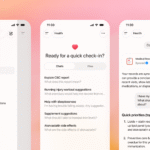
ChatGPT Health is a new section inside ChatGPT that lets US users upload medical records, lab results, and health documents for review. The AI reads through everything and gives you a plain-English breakdown of what it finds. You can ask follow-up questions, get a summary to bring to your next appointment, or just figure out what your blood test results actually mean without spending an hour on WebMD.
It’s the kind of thing a lot of people were already doing manually. Pasting lab results into ChatGPT, typing “what does this mean,” and hoping for the best. OpenAI essentially took that informal workflow and gave it a proper home inside the app, with some guardrails attached. The feature is designed to keep health data separate from your regular ChatGPT conversations and, according to OpenAI, does not use your medical uploads to train future models.
You can upload PDFs, photos of lab results, or typed-out notes. The AI highlights key values, flags anything abnormal, and explains what numbers mean in context. For example, if your LDL cholesterol shows up as 165 mg/dL, it won’t just say that’s high. It’ll explain what LDL is, why the number matters, and what range you should be aiming for. That part is genuinely useful.
How to access it
Right now, ChatGPT Health is available to free and paid users in the US. Open it, and you will see a new “Health” section in the sidebar. Click it, upload your document, and start asking questions. There is no extra charge for this feature on any plan.
The lawsuit that changes the conversation
Days before the official launch, Scott Winters, a 55-year-old pastor from Florida, filed a lawsuit against OpenAI and Sam Altman. Winters claims he consulted ChatGPT repeatedly about dizzy spells and blood pressure instability over several weeks. The chatbot, he says, told him to stay in his recliner and reassured him he would recover. It even wove religious language into its responses, referencing his faith.
He ended up in the hospital with a massive pulmonary embolism. Blood clots in both lungs. His doctors said the immobility caused by following that advice likely made it worse. The lawsuit describes how the AI’s “authoritative tone” and “sycophantic nature” created a dangerous dependency that isolated Winters from family members who wanted him to see a real doctor.
OpenAI’s response was direct: “ChatGPT is not a doctor and should never be used as a substitute for medical care, diagnosis or treatment.” That statement is accurate, but it also highlights the core tension. People use ChatGPT for medical questions anyway. Giving it a dedicated Health feature makes that behavior feel more legitimate, even if the disclaimers say otherwise.
What ChatGPT Health does not do
This is the part that matters more than the features. ChatGPT Health does not diagnose you. It cannot prescribe treatment, order tests, or replace a doctor. It reads documents and explains what they say. There is a meaningful difference between “explaining a lab result” and “telling you what to do about it,” but in practice, users blur that line constantly.
The AI also cannot account for your full medical history the way a physician can. It sees what you upload, nothing more. It doesn’t know your family history, your current medications, your allergies, or the pattern of symptoms a doctor would recognize from years of experience. Context that seems obvious to a human specialist is completely invisible to a language model processing a single document.
And here is the bigger issue: ChatGPT can hallucinate. It can confidently tell you a lab value is normal when it is actually borderline high. It can miss interactions between medications that a first-year medical student would catch. The probabilistic nature of language models means there is always a non-zero chance of getting something wrong, and with health information, “something wrong” can mean delayed treatment, missed diagnoses, or worse.
How to use ChatGPT Health safely
If you are going to use it, and plenty of people will, there is a responsible way to do it.
Use it as a translator, not an advisor. Upload your lab results and ask ChatGPT to explain what each number means. Ask it to define medical terms you don’t recognize. Use it to prepare questions for your actual doctor’s appointment. That is where it adds real value without the risk.
Never follow medical advice from ChatGPT without confirming with a professional. This sounds obvious, but the Florida lawsuit shows exactly what happens when people don’t follow this rule. The AI can sound more confident than your actual doctor, which makes its advice feel more authoritative, not less.
Know its limits. ChatGPT Health is a reading comprehension tool for medical documents. It is not a diagnostic engine. It is not connected to any medical database or clinical decision support system. It’s a language model doing what language models do: predicting the next most likely token based on its training data.
The bottom line
ChatGPT Health is a solid addition if you treat it as a medical document reader that helps you prepare for real medical conversations. Upload your labs, get plain-English explanations, write down your follow-up questions. Then take those questions to an actual doctor. The feature itself is not dangerous. The danger is in how people use it, and no disclaimer in the world changes that.