


Amazon just became the first big advertiser inside ChatGPT, and that changes the math for anyone selling stuff online. The two companies confirmed a pilot this week that lets Amazon advertisers run campaigns directly in ChatGPT conversations. If you sell on Amazon, or market anything to ChatGPT’s billion weekly users, keep reading.
Here’s the short version of Amazon ads in ChatGPT: brands using Amazon’s ad platform (called Amazon DSP) can now extend those campaigns into chat conversations as sponsored messages. Delta Vacations is already testing it. The pilot is US-only for now, and OpenAI keeps full control over where ads appear.
What actually launched
The details matter here, because “ads in ChatGPT” could mean a lot of things. According to Marketing Dive’s report on the partnership, it works like this:
- Who can buy: Amazon advertisers, through Amazon DSP as a managed service. Amazon’s team helps set up and optimize your campaign.
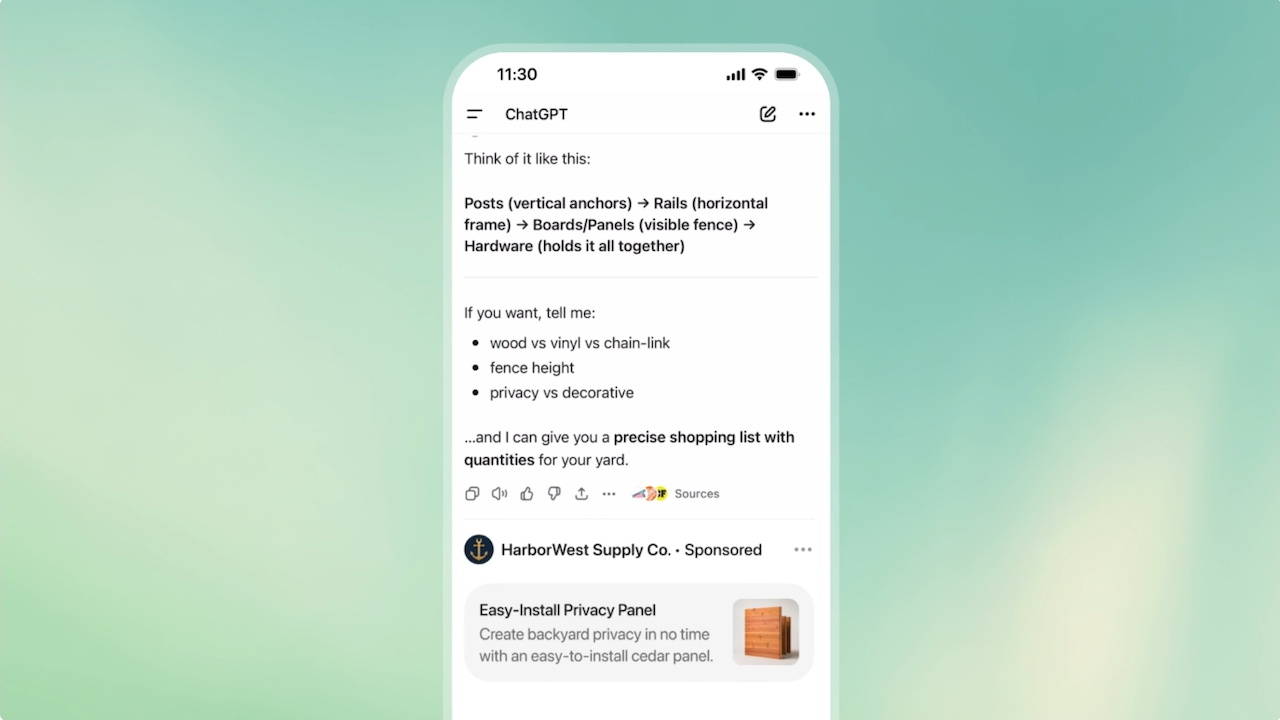
- Where ads show: text and image units beneath ChatGPT’s organic answers, clearly labeled as sponsored.
- How you pay: cost-per-click (CPC) or cost-per-thousand-impressions (CPM).
- Who controls placement: OpenAI, through its own delivery systems. Amazon brings the advertisers, but OpenAI decides where ads land.
- Where: United States only at launch.
There’s also a product feed option, where ads get generated automatically from your product catalog. Upload your catalog once, and the system builds the ad units for you. For small sellers without a marketing team, that’s the most interesting piece.
Why Amazon ads in ChatGPT make sense for both
Neither company is doing charity here. Look at what each side gets.
OpenAI’s ads business is young and growing absurdly fast. ChatGPT Ads launched earlier this year, reached a $1 billion annualized run rate by August 31, and now runs in more than 40 countries. The company is reportedly targeting $2.5 billion in ad revenue this year, ahead of a planned IPO. Amazon DSP brings tens of thousands of advertisers to that party, many of whom have never bought an ad outside Amazon before.
Amazon, meanwhile, gets access to the biggest AI chat audience on the planet. Its ad business, around $70 billion last year, is almost entirely people searching on Amazon.com. ChatGPT users are somewhere else entirely: asking questions, planning trips, comparing products before they ever open a store. That’s new territory for Amazon’s ad machine, and it’s exactly where consumer attention is moving.
Digital ad people have a boring name for this (retail media meets conversational AI), but the practical effect is simple. The moment you ask ChatGPT “what’s a good vacuum for pet hair,” that answer now has sponsored options underneath it. Whoever sponsors them gets in front of you at decision time.
What it means if you sell on Amazon
If you already run Sponsored Products or Amazon DSP campaigns, this is mostly good news, and here’s the practical read for making Amazon ads in ChatGPT work for your store:
Your existing campaigns may get a new surface. The pilot extends Amazon-managed campaigns into ChatGPT, so talk to your Amazon ads rep about opting in. Early pilots like this tend to have cheaper inventory, because advertisers are scarce and the platform wants volume. Delta Vacations won’t be testing this for the prestige.
Your product feed just became an ad asset. The auto-generated product feed ads mean your catalog can produce conversational ad units without a designer. If your listings have clean titles, good images, and accurate data, that feed work pays off twice now.
Measurement is limited at first. Pilot participants get aggregated numbers: impressions, clicks, cost per result, CPC and CPM. Not much deeper than that. So treat this like any new ad channel: small budget, tight tracking, judge with your own numbers.
What it means for everyone else
Maybe you don’t sell on Amazon. The ripple effects still reach you, in three ways.
First, ads on free ChatGPT are becoming permanent infrastructure. ChatGPT Ads currently run on Free and Go plans, while Plus, Pro, Business, and Education stay ad-free. As the ads business grows, expect more formats, more countries, and more sponsored slots in answers you use for work research.
Second, every AI assistant will copy this. When OpenAI proves chat ads can generate a billion-dollar run rate in under 200 days, competitors respond. We’ve already seen Anthropic mock the whole idea in a Super Bowl ad, then release commerce agents of its own. If your business model depends on being visible in AI answers, this pilot is another sign you should care about how AI search visibility works.
Third, the affiliate and arbitrage window is closing. Early ChatGPT ads mean the chatbot’s recommendation surface is now officially for sale. Organic mentions still matter, but paid placement is moving in. Builders who made money getting products recommended in chat are watching ad inventory eat their margins.
How to prepare, step by step
Here’s a realistic action plan depending on your situation:
- Amazon sellers: audit your product feed this week. Fix titles, images, and data quality in Seller Central. Then ask your ads rep about ChatGPT placement availability for your account.
- Small advertisers outside Amazon: watch for the managed service to widen. Amazon DSP historically lowered entry barriers through resellers, so a path for smaller budgets will probably appear. When it does, test with $5 to $10 a day before scaling.
- Content creators and affiliates: diversify now. If your income leans on recommending products inside AI conversations, add channels you control (email lists, communities) before sponsored inventory crowds the space.
- ChatGPT free users: expect more labeled sponsored content under answers. It’s worth knowing the ads don’t change the answers themselves, per OpenAI, and advertisers don’t see your conversations.
None of these steps are urgent today. All of them will feel smart in six months.
The risks worth naming
Honest take: Amazon ads in ChatGPT could also go sideways, and it’s worth saying how.
Trust is the whole product for ChatGPT. If users start doubting answers because sponsored content sits under them, usage drops, and that hurts everyone including advertisers. OpenAI knows this, which is why ads appear separately from responses and sensitive topics (health, politics) are restricted. Still, “clearly labeled” is doing a lot of work in that sentence.
There’s also a concentration question. Amazon is the third-largest digital ad platform on Earth. Handing its advertisers a route into the world’s biggest chatbot makes both companies stronger, and squeezes everyone in between. Regulators on both sides of the Atlantic are already paying attention to AI advertising practices.
And for marketers, one more caveat: this is a pilot. Inventory is limited to the US, features will shift, and OpenAI controls delivery. Don’t build a 2027 strategy on a September 2026 test.
The takeaway
Amazon ads in ChatGPT mark the moment AI chat officially became an advertising channel, not an experiment. Sellers should clean up their product feeds and ask about access, while everyone else should watch how fast this spreads. The smartest move this week is small: audit your feed, follow the rollout, and be ready to test when doors open wider.
If you want the broader picture on making money as AI shopping evolves, our guide to Claude’s commerce agents covers the other big assistant pushing into purchases. And for a warning tale on shopping scams inside assistant apps, see our piece on the Alexa scam checker.