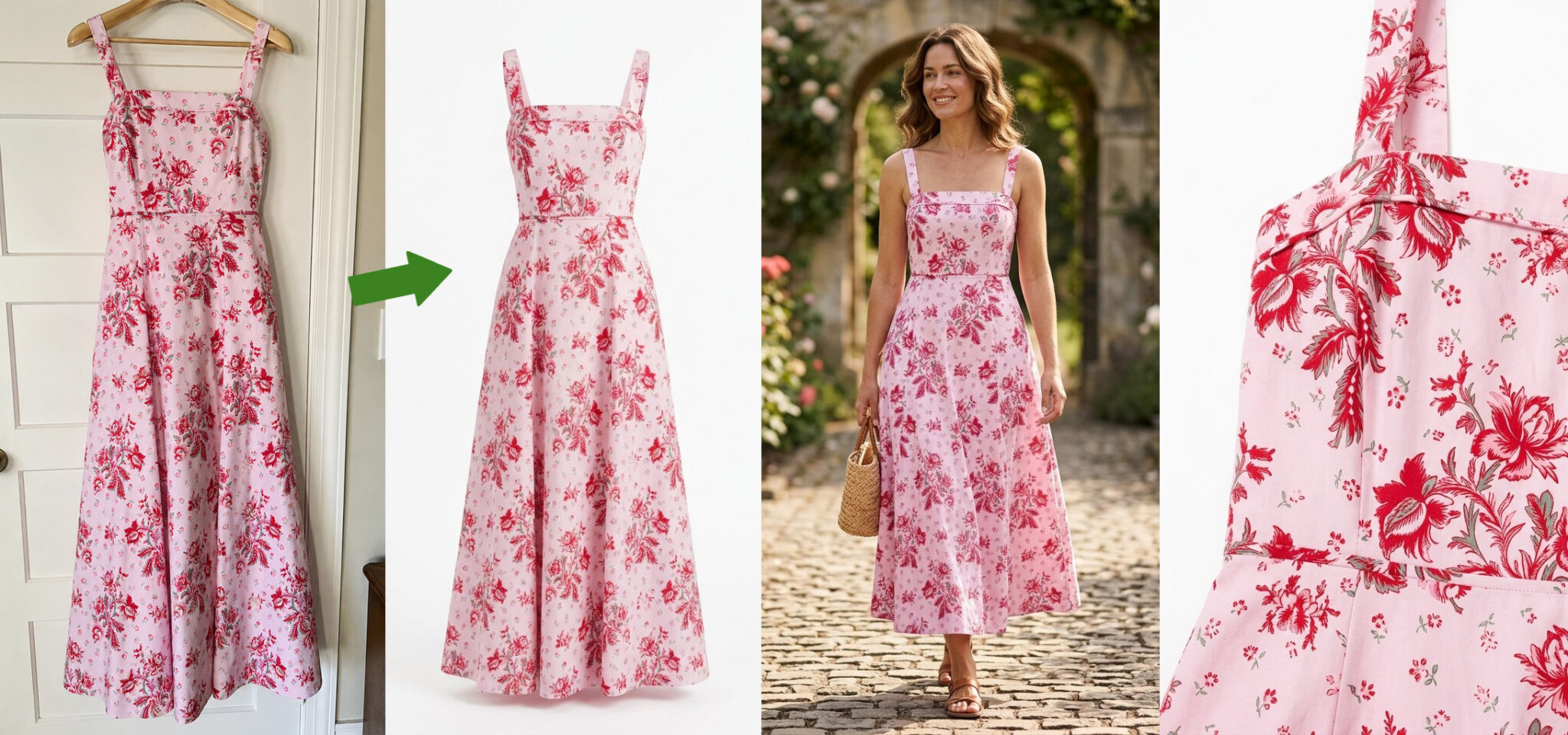

A single product listing usually needs a photographer, a copywriter, and someone who understands SEO. If you run a small Shopify store, that person is you, all three of them, probably tonight. MerchantFloor, a new AI tool, now claims it turns one product photo into a full listing in five minutes. AI product listings Shopify sellers can publish that fast would change the math for every small store, so I dug into what the tool actually does before Black Friday makes everything chaotic.
Why product listings eat your week
Ask any solo store owner where their time goes and the answer rarely involves selling. Uploading 20 products means 20 rounds of background removal, description writing, alt text, meta descriptions, and resizing photos for every placement. At a leisurely pace, that’s a full workday gone.
The stakes got higher this year, too. Buyers increasingly find products through AI assistants instead of typing keywords into a search bar, which means your listing has to be readable by machines as well as humans. Sloppy listings don’t just look bad. They become invisible to a growing chunk of shoppers.
That’s the quiet logic behind AI product listings Shopify assistants prefer to quote: clean structure beats pretty prose, every time.
That’s the problem MerchantFloor, a Berkeley startup, went after with its Product Listing Agent, launched November 5, 2026.
What MerchantFloor’s listing agent does
The pitch is one photo in, complete listing out. You upload a product photo, add a few notes about the item, and the agent gets to work. Here’s what it generates:
- White-background product images for the main listing
- Lifestyle shots and model photos, which normally cost real money at a photo studio
- A product description written for shoppers
- An SEO title and meta description for search
- Image alt text, the detail most sellers forget entirely
- FAQs for the listing page
Everything lands in a draft for you to review and edit. Nothing goes live until you approve it. Then the agent pushes the finished listing straight into your Shopify admin, no downloading files and re-uploading them to another tab.
That review step matters more than it sounds. AI-generated product images can occasionally get details wrong, a button misplaced, a shade slightly off, so keeping a human eye on the draft before publish is exactly the right design. You stay the editor; the agent does the typing.
How to create AI product listings on Shopify with MerchantFloor
Setup takes minutes, and there’s no code involved anywhere. The practical flow looks like this:
- Install the app from the Shopify App Store (search for MerchantFloor) or sign up at merchantfloor.com.
- Open the Product Listing Agent and upload one clear photo of your product.
- Add a few notes: what it is, who it’s for, any detail the AI shouldn’t invent.
- Let the agent generate the image set, description, SEO fields, and alt text.
- Review the draft, fix anything that looks off, then send it to your Shopify admin.
- Repeat for the rest of your catalog, one product at a time.
Pricing isn’t printed in the launch announcement, so check the app listing before committing. The company also sells standalone apps for product photography, descriptions, social captions, and blog posts if you only want one piece of the workflow. Their product page shows the demo video if you’d rather watch the flow than read about it.
Where AI product listings for Shopify still fall short
The listing agent handles launch content, yet MerchantFloor’s own site lists separate apps for social captions and blog creation. If your marketing plan leans on a full content calendar, you’ll be stitching those pieces together yourself, or running a second tool next to this one.
Realistic expectations before you bulk-upload
Five minutes per listing is the best case, not the average. Complicated products, think clothing with distinctive patterns or anything with fine texture, deserve a slower pass on the generated images. Expect your first few listings to take longer while you learn which notes produce good output. Speed comes after the third or fourth product, not the first.
What the agent still needs from you
The tool handles production, not judgment. Your product notes are the brief behind the whole AI product listings Shopify process, and they decide whether the description sounds like your brand or like every other listing on the internet. Write them like you’re briefing a new employee. Specific details in, specific details out.
Also worth remembering: the agent writes FAQs and meta descriptions, but you own the final call on accuracy. If you sell a “waterproof” bag that’s only splash-resistant, the AI doesn’t know that. A five-minute review pass on claims and specs protects you from returns and, occasionally, from lawsuits.
Who should skip it
Brands with strict photo style guides will fight the generated images more than they save time, since consistent lighting and styling across a catalog is exactly what AI images struggle to hold. Stores with professional photography already in place lose most of the tool’s core benefit too. And anyone with thousands of SKUs shouldn’t hand the whole catalog to a brand-new agent on launch week regardless. This tool was built for the ten-to-fifty-product store wearing five hats, and that’s exactly who gets the most out of it.
Why AI product listings for Shopify matter before Black Friday
Here’s the part most launch coverage skips. Shopify stores already sell through AI agents in some regions, and we’ve covered how agentic checkout changes Shopify selling end to end. When a shopper’s assistant compares five similar products, it sees structured fields, clean descriptions, and alt text, not your brand story. AI product listings Shopify assistants can parse get quoted by the assistant. The rest get skipped.
That’s also why the timing of this launch is pointed. Store owners are racing to stock and list products for Black Friday right now, and the sellers with complete, machine-readable listings will be the ones AI assistants actually recommend. If search-driven discovery shaped your traffic last year, our guide to Shopify AI search explains what changed under the hood.
For sellers exploring other income angles with AI, comparing platforms like the ones in our sell online courses with AI breakdown is a useful side trip, since the same “let AI handle production, you handle judgment” pattern repeats everywhere.
One honest caveat to close with: MerchantFloor is a brand-new tool from a small team, and independent reviews barely exist yet. The AI product listings Shopify merchants ship with it this month will compete against big-brand pages, so treat your first batch as a trial run and judge the output yourself before the whole catalog depends on it.
Your next move
Pick your five best-selling products and rebuild their listings with the agent this week, well before the Black Friday crunch. Review every draft yourself, keep your claims honest, and measure whether the new listings actually convert better. If they do, you’ve just bought back a chunk of your December.