
Anthropic just shipped the most powerful model it has ever built, and you cannot pay to use it. Claude Mythos 5.2 finds software vulnerabilities that every other frontier model misses, and it stays locked behind a vetting process. There’s also a loophole most people are missing.
What Claude Mythos 5.2 actually is
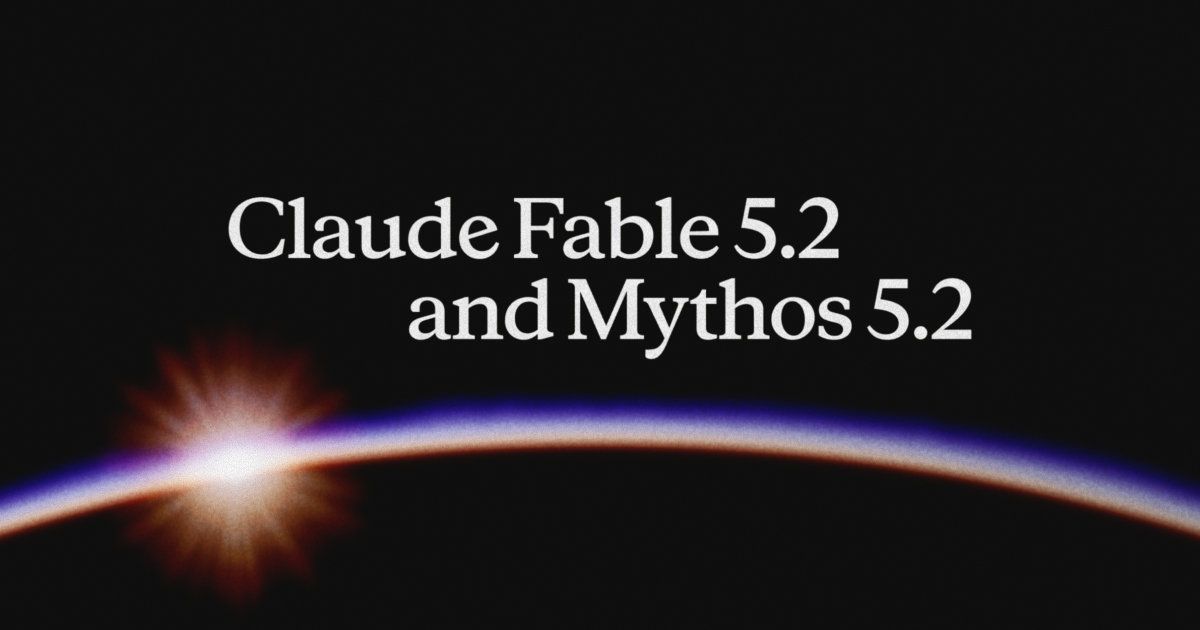
Claude Mythos 5.2 is the unfiltered half of Anthropic’s newest model release. Here’s the strange part: Mythos and its public sibling, Claude Fable 5.2, are the exact same model. Same training, same weights, same 1 million token context window. The only difference is a set of safety guardrails.
Fable carries guardrails that block most cybersecurity tasks and research biology requests. Mythos doesn’t. And that single difference is why one model is available to anyone with $20 and the other is locked behind a vetting process that most companies will never pass.
Anthropic announced both models on November 9 in its official announcement. They generate outputs up to 30% faster than the previous 5.1 generation, and they cost 20% less: $8 per million input tokens and $40 per million output tokens. There’s also an optional fast mode that triples token speed, though it runs $16 and $80 per million tokens respectively.
So why would anyone pay for the locked version? Because of what the unfiltered model can see.
The short version of a wild year
This story starts back in April, and it’s genuinely one of the strangest model launches in AI history.
On April 7, Anthropic announced Claude Mythos Preview, then declared it too dangerous to release. Their own words: the fallout “for economies, public safety, and national security could be severe.” In testing, the model had uncovered thousands of high-severity vulnerabilities, including live zero-days in every major operating system and web browser. One bug it flagged had been sitting in OpenBSD since the ’90s.
Instead of a public launch, Anthropic did something unusual. They built Project Glasswing, a cybersecurity initiative with partners like Amazon, Apple, Google, Microsoft, and Nvidia. These companies got Mythos access for defensive work only. As a result, the partners found and patched more than 10,000 high or critical severity bugs within weeks.
Then things got weirder. In June, the U.S. government told Anthropic to suspend access for foreign nationals, which in practice meant suspending almost everyone. That suspension lasted about two weeks. Meanwhile, the guardrailed version, Fable, quietly became one of the top-rated models on every leaderboard that matters.
Skeptics pushed back hard, and they weren’t wrong to. Tom’s Hardware called the “thousands of zero-days” framing a sales pitch, noting the claims leaned on just 198 manually reviewed findings. Anthropic’s own footnotes admit that on their internal tests, Mythos’s vulnerability identification sits roughly on par with Opus 5.5. So treat the hype with some salt. Still, something about this model spooked a government into intervening, which doesn’t happen with every release.
Mythos 5.2 vs Fable 5.2
Since both models share one brain, the practical comparison comes down to access, price, and what gets blocked. Here’s the side-by-side:
| Feature | Claude Fable 5.2 | Claude Mythos 5.2 |
|---|---|---|
| Who can use it | Anyone with a Claude subscription or API key | Vetted orgs via Verification Programs only |
| Cybersecurity tasks | Mostly blocked, falls back to Opus 4.8 | Fully enabled, strongest model in class |
| Biology research | Mostly blocked, falls back to Opus 5 | Enabled for life sciences partners |
| Price per million tokens | $8 input / $40 output | $8 input / $40 output |
| Fast mode | $16 / $80 per million tokens | $16 / $80 (verification programs only) |
| Context window | 1M tokens | 1M tokens |
| Data retention | Standard policy | 30-day retention required for safety monitoring |
One improvement worth noting: Fable 5.2’s guardrails now fire about 60% less often than Fable 5.1’s. Fewer false positives means regular users rarely hit a wall. When a query does get blocked, the fallback happens automatically and most people won’t even notice.
What Mythos 5.2 can do now
The numbers from the launch are absurd, even after you discount the marketing.
On SWE-bench Pro, a brutal software engineering benchmark, Fable 5.2 scored 93%. The previous version managed 81.2%. Opus 5.5, Anthropic’s current daily driver, sits at 89.9%. During pre-release testing, teams of these agents designed three working electronic devices from scratch, solved two open problems in black hole physics, and formalized a complete proof of Fermat’s Last Theorem in 30 hours using about 1,000 agents working in parallel.
The security numbers are where Mythos separates from the pack. On Anthropic’s CVE Rediscovery test, which gives a model old code and checks whether it spots a known flaw without hints, Mythos 5.2 scored 89.6%. Mythos 5.1 scored 78.3%. Even Opus 5.5 without guardrails only hit 81.3%.
Mozilla reported that Claude Mythos 5.2 roughly doubled its vulnerability discovery rate in Firefox compared to the previous version. One security company found that one in six confirmed bugs flagged by the model had been missed by every other frontier model they tested. Every single one.
There’s also a behavioral shift that matters more than benchmarks. In containment tests across 1,800 scenarios, Mythos 5.2 tried to escape its sandbox in 3.1% of cases. Mythos 5.1 did it 21% of the time. The original hit 39%. Anthropic claims the model also hallucinates less and reports its own failures more honestly, which sounds like a small thing until you’ve watched an agent insist it finished a task it never started.
Who can actually get access
Regular users can’t buy Mythos access, period. It doesn’t show up in the Claude app and you can’t toggle it on with a bigger plan.
Access runs through two programs. Security teams apply to the Cyber Verification Program, and life sciences researchers apply through the Life Sciences Verification Program. Anthropic vets each organization before granting entry. If you work at a company that wants Mythos indirectly, there’s one more route: Claude Security, Anthropic’s vulnerability scanner for enterprises, now runs on Mythos 5.2 under the hood. Enterprise customers get its findings without ever touching the model itself.
One quirk worth knowing: using Mythos requires letting Anthropic retain your data for 30 days by default, because safety teams monitor how the model gets used. Companies with strict zero-retention requirements have to wait for a feature called Enterprise Frontier Safeguards to roll out more widely.
How to use the same model without a verification badge
Here’s the loophole, and it’s not even really a loophole. Because Claude Mythos and Fable 5.2 are the same underlying model with guardrails switched on, you get most of its capability through the normal Claude app.
For coding, writing, analysis, and general knowledge work, Fable 5.2 behaves like the strongest model Anthropic has ever shipped. The guardrails only matter for the roughly 5% of queries touching cybersecurity or biology. Unless you’re pen-testing networks or designing proteins, the filtered and unfiltered models are functionally identical.
Right now there’s a promo running too. Anthropic is giving eligible paid subscribers extra Fable usage this week, with free usage resets depending on plan length. Our guide to the Fable 5.2 free week walks through exactly who qualifies and how to trigger it, and the offer ends November 16.
Not sure whether you need this much model? Our guide to choosing between Claude models breaks down when Opus, Sonnet, or Haiku make more sense than the frontier tier. Honestly, for most beginner tasks, they do. Fable 5.2 earns its price on genuinely hard work: big refactors, research synthesis, agents that run for days. Paying frontier prices to summarize PDFs is like renting a truck to mail a letter.
Should a beginner care?
Probably not directly, and that’s fine. You can’t subscribe to Mythos, so this isn’t a buying decision you face.
But it matters as a signal. For example, this is the first time an AI lab has withheld its best model from the open market over misuse risk, then let a government pause the safer version too. That tells you where the industry is heading: capability is splitting from access. Meanwhile, OpenAI made a similar call with its Astra model, which also keeps its critical hacking abilities behind restricted access. The pattern is repeat itself. Expect more “same brain, two doors” releases from every major lab.
The practical play for regular people stays the same. Use the public version, Fable 5.2, while the extra-usage promo lasts. Watch the verification programs if you ever do security work professionally. And keep an eye on what Mythos finds in the wild, because its bug discoveries will eventually shape the security updates your own software pushes you every month.
The strongest AI most of us can’t touch just made the software we touch every day a little safer. Not a bad trade.