
Parents are paying $75,000 a year for a school where AI does most of the teaching. The school’s own data says most of those kids aren’t learning twice as fast after all.
That’s the uncomfortable finding inside the Alpha School network, the startup-backed chain that promised to replace classrooms with a two-hour AI school day. Silicon Valley loved the pitch. The numbers just showed up, and they’re messier than the brochure. Before you write a tuition check or dismiss AI tutoring entirely, the details are worth your time.
What Alpha School actually is
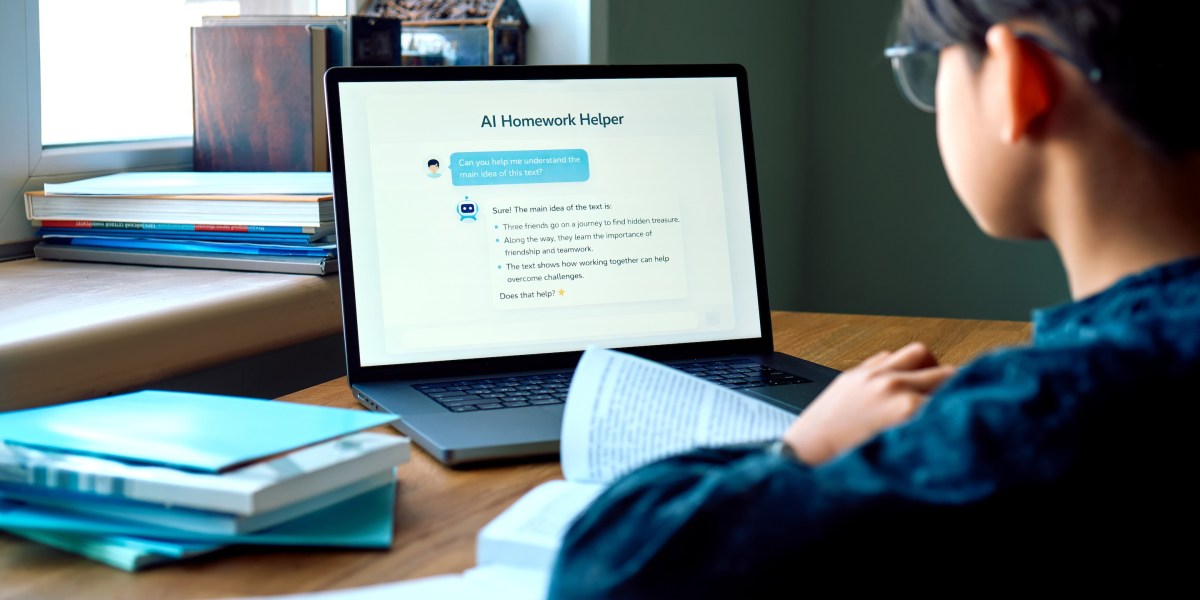
Alpha is a private school network, mostly in Texas and a few other states, built around one big claim: kids working with AI tutoring apps can finish all core academics in two hours a day. The rest of the day goes to workshops, sports, and projects. Tuition runs up to $75,000 a year at some campuses, which puts it in the same price tier as elite boarding schools.
The pitch leans on “2x learning,” the promise that students progress twice as fast as kids in regular classrooms. Founders have argued that one good tutor can out-teach a class of thirty, and software can put a personal tutor in front of every kid. That idea isn’t crazy. One-on-one tutoring has been the gold standard in education research for decades. Alpha’s bet was that apps could deliver it at scale, cheaply enough to hire fewer human teachers.
It attracted serious backers, and coverage in Fortune notes the network drew support from tech investors and even policymakers. Which is why the school’s own results, when they surfaced, landed so hard.
The numbers behind the $75k promise
Here’s what Alpha School’s internal data, first reported by the New York Times, actually shows. Only 42% of Alpha students hit the network’s goal of learning twice as fast in both math and reading. That’s the central promise of the whole model, and a majority of kids missed it.
Math is the weakest spot. About half of K-8 students missed the 2x math goal entirely. Worse, roughly one in five students at Alpha’s private campuses scored at or below the 50th percentile nationally in math, and among that struggling group only 37% caught up to the growth target by winter. If a $75,000 AI tutor were a magic accelerator, those numbers would look very different.
There’s a legitimate counterpoint buried in the data. Missing a “learn twice as fast” bar is not the same as falling behind. A kid at the 50th percentile who grows at a normal rate is still fine. But that’s a different pitch than the one that sold parents on the school. You can charge a premium for a luxury product. You can’t quietly downgrade the promise from “guaranteed acceleration” to “roughly normal progress with a cool schedule.”
Where the model breaks down
The failure pattern tells you something about how kids actually use AI. Motivated students with strong baseline skills tend to do great with self-paced apps. The software moves fast, they keep up, everyone celebrates. Kids who struggle get stuck differently: an app can’t notice the moment a concept quietly didn’t land, and a frustrated eight-year-old is very good at looking busy.
Human teachers do invisible work that apps don’t. A good teacher notices the kid who’s given up, spots the misconception hiding behind a right answer, and adjusts in ways no rubric predicts. Strip that out and you get exactly what the data shows: the middle does okay, the bottom falls through.
There’s also an incentive problem worth naming. Alpha grades its own homework. When a company sells 2x learning and also decides whether students achieved it, skeptical parents should ask for outside proof. The Times getting hold of internal numbers suggests even the school’s own measurements, generous or not, fell short of the marketing.
What researchers say about AI and learning
Alpha School isn’t an isolated data point. The OECD’s latest PISA results found students who use AI daily scored lower in science than students who don’t, while moderate users performed about the same. Daily dependence doesn’t seem to help, at least not yet.
None of this means AI tutoring is useless. It means dose and design matter. The apps that show real gains tend to do a few specific things: force the student to produce answers rather than watch explanations, space practice out over days, and make the student explain their reasoning back. Passive consumption, the “AI explains it while I nod along” mode, looks closer to watching TV.
If you want to judge any AI learning product, for your kid or yourself, ask three questions. Does the student have to think to move forward? Does anyone or anything notice when they’re stuck? And is there outside evidence for the speed-up claim, beyond the company selling it? Products that fail those questions are selling the feeling of learning, which is a very different product.
We compared how the major chatbots actually hold up as study partners in our Claude vs ChatGPT vs Gemini for learning guide, and the pattern there matches Alpha’s data: the tool helps most when the human stays in the driver’s seat.
Steal the parts that work (without paying $75k)
Here’s the useful irony. You can recreate most of what works at Alpha School for roughly zero dollars, and skip the parts that don’t.
Keep the two-hour block. Focused, phone-free study time genuinely beats six hours of distracted classroom time. That part of the model was never wrong. A timer and a kitchen table do the job.
Use AI as a tutor, not an answer machine. The difference is one instruction. Ask a chatbot to quiz you, make you explain your reasoning, and refuse to give the answer until you’ve tried. Every major chatbot will do this if you tell it to. Our rundown of free AI courses for beginners is a good zero-cost starting stack for adults.
Track progress with something external. Practice tests, past exams, a workbook with answer keys. Anything the AI didn’t grade. Alpha’s lesson is what happens when the seller also keeps score.
Keep a human in the loop. For kids especially, an adult who checks in weekly catches what the app misses. The data says that’s exactly the layer Alpha’s model removed too aggressively.
Should you pay for an AI school?
If you have $75,000 and the schedule flexibility changes your family’s life, the honest answer is: maybe, with eyes open. Some Alpha School students genuinely thrive, and two-hour academics with rich afternoons is a real offer. What’s no longer defensible is believing the acceleration claims on faith, because the school’s own numbers don’t support them yet.
For everyone else, the takeaway is cheaper and better. AI tutoring works in moderate doses, with the student doing the thinking, and with progress measured by someone who isn’t selling it to you. The parents who understand that will outlearn the ones writing $75k checks, and they’ll keep the money.
And if your kids use AI tools at home already, it’s worth setting the guardrails deliberately. Our guide to AI chatbot parental controls covers what you can actually lock down today.