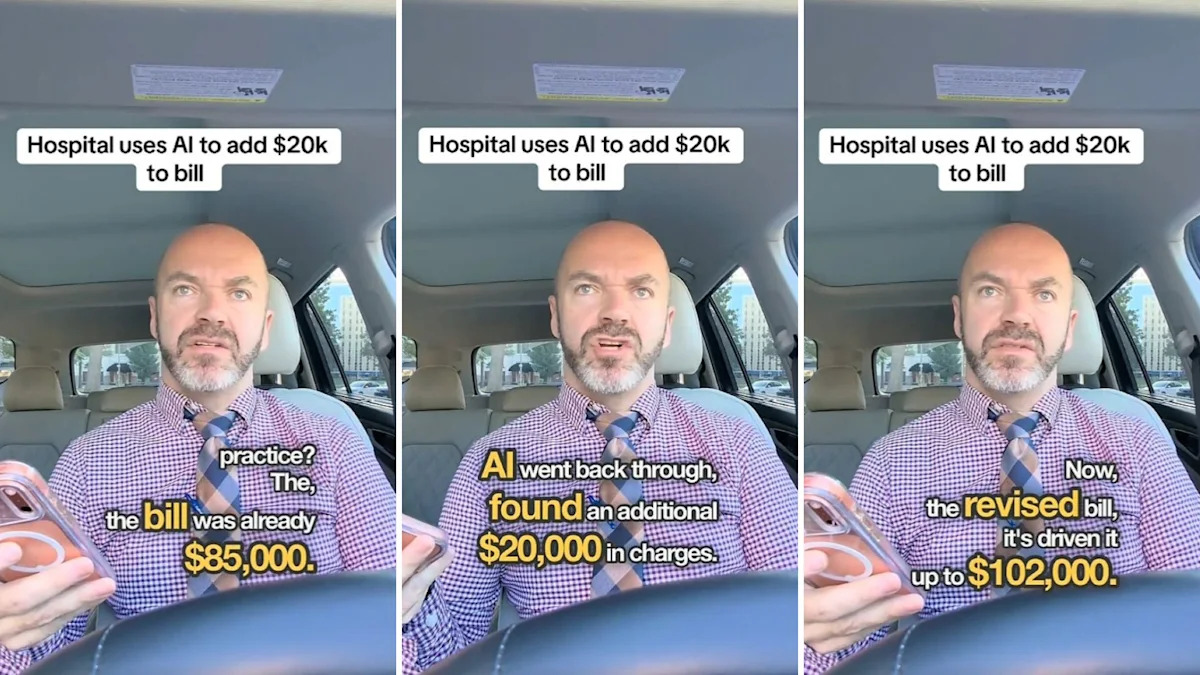

A patient got hit with an $85,000 hospital bill and pushed back. The hospital then ran an AI sweep of the visit and added nearly $20,000 in charges nobody saw the first time. If you’ve been putting off fighting a scary bill, here’s how to dispute a hospital bill without making things worse.
What happened with the $85,000 bill
The story blew up on TikTok through a social worker who posts as Aaron the Social Worker. According to his video, the hospital “did an AI sweep” of the patient’s visit, decided some charges had been left off the original bill, and sent a revised total of $102,000.
Let that sink in. The patient questioned the bill. The response, as Aaron tells it, was essentially: congratulations, here’s a bigger one.
Aaron did a few things right on the recorded call, and they’re worth stealing. He demanded specifics instead of arguing about the total: which charges, for what services, on which days. He asked whether the new charges had actually been submitted to insurance and whether that process finished. And he asked the question more hospitals are going to hear in 2026: is using an AI sweep to re-bill a patient standard practice?
Nobody knows yet whether the added charges hold up, and the hospital hasn’t publicly explained its side. But the comment section reaction, everything from HIPAA violations to “that’s punishment for disputing,” tells you how much trust is floating around AI and medical billing right now. Congress is already pushing to stop AI-driven claim denials, and researchers keep finding that tiny wording changes can flip what health chatbots tell patients. The technology is inside the billing office whether we like it or not.
Why AI is suddenly in your medical bills
Hospitals and insurers have quietly adopted AI for revenue cycle work: scanning visits for missed charges, coding claims, flagging denials. A billing AI that finds “left off” charges isn’t necessarily evil. Sometimes the first bill really did miss something.
But the incentives point one direction. When a hospital’s AI reviews a visit, it looks for revenue the hospital left on the table. When an insurer’s AI reviews a claim, it looks for payments to deny. You’re not in the room for either review.
That’s exactly why the old advice still works, with a few upgrades. Paperwork beats outrage. Specifics beat anger. And now you should also ask whether a machine reviewed your bill.
How to dispute a hospital bill, step by step
Before anything else, request an itemized bill. This is your single most powerful move, and most people never do it. A summary bill says “$85,000.” An itemized bill lists every pill, every lab, every 15 minutes of room time with a code and a price. In several states, hospitals must provide one on request, and some must send it automatically after an inpatient stay. You cannot meaningfully dispute a hospital bill against a lump sum.
Then work the list:
- Get the itemized bill in writing. Call the billing office, ask for a “fully itemized statement,” and get it by mail or portal. Note who you spoke to and when.
- Match every charge to a date and a service. AI sweeps have a habit of resurrecting charges from other visits or double-counting. Check each line: were you actually there that day? Did you actually get that? Duplicates and units that look padded (one X-ray billed three times) are your targets.
- Ask what changed and why. If you’re disputing a revised bill, put it in writing: “Please identify each charge added in the AI review, the service date, and the billing code for each.” That’s the Aaron move, formalized. Vague answers here are a red flag worth escalating.
- Compare against your Good Faith Estimate or EOB. If you’re self-pay, federal rules say providers must give you a Good Faith Estimate for scheduled care, and if the final bill beats it by $400 or more, you can escalate (more on that below). If you used insurance, pull the EOB and check the hospital billed your insurer for the new charges too.
- Dispute in writing, keep copies. Phone calls are fine for questions, but your paper trail is what protects you. Send disputes through the portal or certified mail. Keep everything.
- Ask about charity care and financial assistance. Nonprofit hospitals must offer financial assistance programs by law, and many patients qualify without knowing it. A $102,000 bill at a nonprofit hospital with an active assistance policy is a negotiation, not a verdict.
Your federal backup options
When the hospital stalls, escalate. The right route to dispute a hospital bill depends on your situation:
| Route | When it applies | Deadline | Cost |
|---|---|---|---|
| Hospital patient advocate | Any billing dispute, first escalation | None | Free |
| Insurance appeal | Claim denied or paid wrong | Usually 180 days from denial | Free |
| CMS dispute resolution (PPDR) | Self-pay, bill is $400+ over your Good Faith Estimate | 120 days from initial bill | $25 fee, credited back if you win |
| CFPB complaint | Bill went to collections or hit your credit report | None | Free |
| State attorney general | Suspected fraudulent or deceptive billing | Varies by state | Free |
The PPDR route is the most underused. Under the No Surprises Act, an independent reviewer looks at your bill, and while the dispute is open, the provider can’t send you to collections or pile on late fees. Winning means the $25 fee comes back as a credit. If you settle along the way, the provider must cut at least $12.50 off the bill, which sounds insulting until you remember settlements are usually much larger.
One caution: if your bill is already with a debt collector, don’t ignore it. Respond, dispute in writing, and file with the CFPB. Collectors must stop pursuing a No Surprises Act dispute until it’s resolved.
If an AI review added your charges
The $85,000 case is a preview of a new question patients will ask: was a machine involved? So ask it directly, in writing: “Was this bill generated or revised with the assistance of automated or AI-based review?” If yes, that strengthens your case for line-by-line specifics, because AI-assisted re-billing is exactly where ghost charges and wrong-code errors sneak in. It also changes how you dispute a hospital bill: an automated review deserves an itemized, human-verified answer. And if you spot charges you never received, say so plainly and keep arguing until someone explains them in human terms.
There’s a bigger pattern here worth your attention. AI is reshaping the insurance industry itself, including the claims jobs that used to catch these errors by hand. Fewer humans in the loop means more errors landing on patients, which means the skill of disputing a bill is becoming a basic financial survival skill.
Same story in other corners of life: when an AI gives you an answer with money attached, verify it before it costs you. Courts have already sanctioned people for trusting chatbots blindly, and medical billing errors work the same way. Trust, then check the math. And if you’re tempted to ask a chatbot what your bill should have been, read our guide on using AI for medical questions safely first.
The takeaway
Get the itemized bill, question every line, and escalate on paper when answers stay vague. The patient in this story may end up owing the extra $20,000 or nothing at all, but either outcome gets decided by documentation, not by who yells louder. Start with one phone call this week: “I’d like a fully itemized statement of my bill.” That’s it. That’s the whole first move.
Sources: The Cool Down via Yahoo News, CMS: dispute a medical bill, and CMS: medical bill rights.