

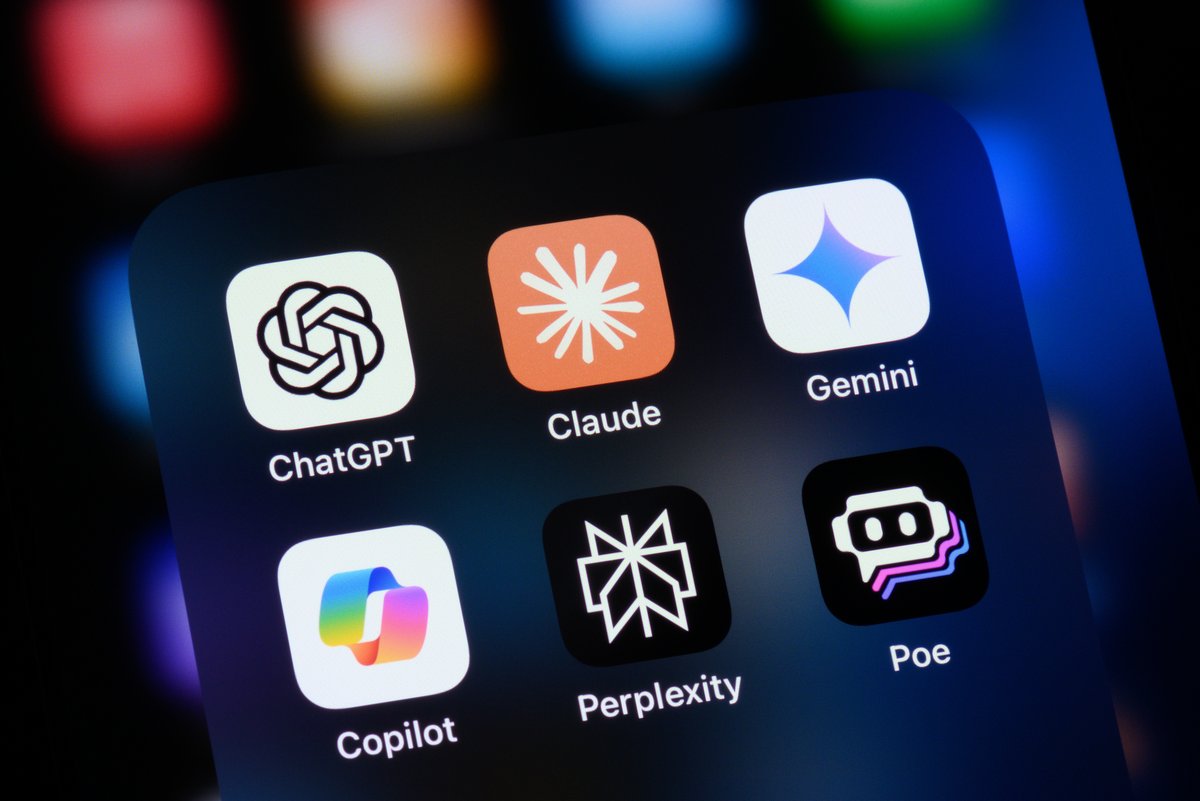

The average professional debates which AI subscription is worth $20 per month. ChatGPT Plus? Claude Pro? Gemini Advanced? Most pick one based on hype, pay for three months, then regret it when it doesn’t match their workflow. You don’t have to guess. You can compare AI models free with your own prompts before you pay a dime.
Why static AI leaderboards lie to you
AI leaderboards rank models on benchmarks nobody actually uses. Coding challenges. Academic math problems. Trivia. Your real work? Emails. Summarization. Brainstorming. Writing proposals. The model that tops a leaderboard might fail at your specific use case. Here’s the thing no one tells you: model performance varies wildly by task type. The same prompt that makes Claude shine might make Gemini look incompetent. And vice versa. Static rankings cannot capture this. They give you a single number for a multidimensional problem. That’s why you need to compare AI models free with your own prompts before you commit to a subscription.
Poe: The best free all-in-one AI model tester
Poe is your best bet for testing multiple models without paying. Created by Quora, Poe gives you free access to ChatGPT, Claude 3, Gemini, Llama 3, Mistral, and more. All in one interface. No API keys. No switching between tabs. You type your prompt once, then toggle between models to see how each responds. This is the closest you’ll get to an AI model comparison tool that feels natural. The free tier is generous. Unlimited messages on most models. Some limitations on the newest frontier models, but enough for thorough testing. Here’s what makes Poe special: you can compare responses side-by-side. Copy-paste your real work prompts. See which model understands your industry jargon. Which one captures your brand voice. Which one actually helps you work faster instead of just generating more text to edit. When you test AI models free on Poe, use three prompt types: coding questions, creative writing, and complex summarization. You’ll be surprised at how differently each model performs. Poe is available on web, iOS, and Android. The apps work offline for downloaded conversations. Perfect for testing during flights or commutes. Go to poe.com and create a free account. It takes thirty seconds.
Chatbot Arena: Blind test models like a scientist
Chatbot Arena takes a different approach. Instead of showing you which model is which, it hides the names completely. You enter a prompt. Two anonymous models respond side-by-side. You vote for the better one. Then it reveals which models you just compared. This eliminates bias. You’re not voting for your favorite brand. You’re voting on response quality. The platform is run by LMSYS researchers at UC Berkeley. It’s completely free. No account required for casual testing. Over 100 models available. Everything from GPT-4 to open-source Llama 3 variants. Chatbot Arena is scientific. Rigorous. It builds a leaderboard based on real human preferences, not synthetic benchmarks. Here’s why it matters: when you compare AI models free on Chatbot Arena, you’re contributing to objective rankings. But more importantly, you’re seeing how models perform on YOUR specific prompts without brand bias. The limitation: you can’t see the model names until after you vote. This makes it hard to remember which one you liked. Workaround: take screenshots of responses before voting. Chatbot Arena excels at head-to-head battles. Same prompt, two models, one winner. Perfect for narrowing down your options before paying. Visit lmsys.org/chatbot-arena to start testing.
Perplexity: Compare models with real web search
Perplexity is an AI-powered search engine that also lets you switch between models. Type a question. Perplexity searches the web, finds sources, then uses an AI to synthesize an answer with citations. The twist: you can choose which AI does the synthesis. GPT-4, Claude 3, or Perplexity’s own Sonar model. This is perfect for research-heavy work. When you need accurate, sourced information. Not just confident hallucinations. Perplexity’s free tier is robust. Daily limits are generous for most users. The search-first approach changes the AI model comparison game. You see how each model handles factual accuracy, source attribution, and synthesis of multiple perspectives. Try this: ask the same research question on each model. Compare the quality of sources. The accuracy of summaries. How well they handle contradictory information. Perplexity shines when you need to know something real. Not generate something fictional. It’s less useful for creative work or coding. But for research, documentation, and fact-checking? Unbeatable among free options. Go to perplexity.ai to start comparing.
How to test AI models for your specific use case
Testing random prompts won’t tell you what you need to know. You need a framework. Start by identifying your top three use cases. Coding? Writing emails? Brainstorming ideas? Analyzing data? Then craft a specific prompt for each use case. A real prompt from your actual work. Not a generic test question. This matters because performance varies by prompt type. A model that crushes coding might be terrible at creative writing. One that’s great at analysis might fail at synthesis. Run each of your three prompts through each model. Use Poe for easy switching. Or Chatbot Arena for blind testing. Score each response on three criteria: accuracy (is it correct?), helpfulness (does it solve your problem?), and tone (does it match how you work?). After testing all three prompts across all models, tally the scores. The winner for YOUR workflow will be obvious. Not the winner on a leaderboard. Not the one everyone recommends on Twitter. The one that actually works for YOUR specific needs. That’s the power of being able to compare AI models free. You stop guessing. You start knowing.
Which model wins for common tasks?
After testing hundreds of prompts across all three platforms, here’s what I found. For coding, Claude 3 Sonnet usually wins. Better code quality. Fewer hallucinations. Better at understanding context from large codebases. For creative writing, GPT-4 remains the leader. More varied styles. Better at capturing brand voice. Stronger on long-form content. For research and summarization, Claude 3 Opus excels. Deeper analysis. Better at synthesis. More accurate on complex topics. For quick Q&A and brainstorming, Llama 3 (the free open-source model) is surprisingly competitive. Fast. Accurate. Good enough for most daily tasks. For image analysis, GPT-4 Vision and Claude 3 Vision are neck-and-neck. Pick the one you already subscribe to. The difference is negligible for most use cases. But here’s the kicker: the right model depends on YOUR specific workflow. Not these generalizations. Take the time to test AI models free with your actual prompts. The hour you spend testing will save you months of subscription regret.
The free testing workflow that works
Here’s my recommendation for anyone deciding on an AI subscription. Start with Poe. It’s the fastest way to test multiple models. Create a free account. Test your top three prompts on GPT-4, Claude 3, and Gemini. Take notes on which feels best for your work. If you’re undecided between two models, run them through Chatbot Arena. Blind testing removes bias. You might be surprised which one you actually prefer. For research-heavy workflows, try Perplexity. Compare GPT-4, Claude, and Sonar on real research questions. See how each handles sources and accuracy. After this testing session, you’ll know exactly which model to pay for. Or you might discover that a free option like Llama 3 on Poe is good enough. That happens more often than you’d think. The point is: stop choosing based on hype. Stop choosing based on leaderboards. Choose based on how the model actually performs on YOUR work. Compare AI models free. It takes an hour. It saves months of regret.
[Link to Best AI models for Zapier automation for more guidance on model selection for workflows.] [Link to GPT-5.6 Sol, Terra, and Luna for frontier model comparisons.] [Outbound link to Poe]