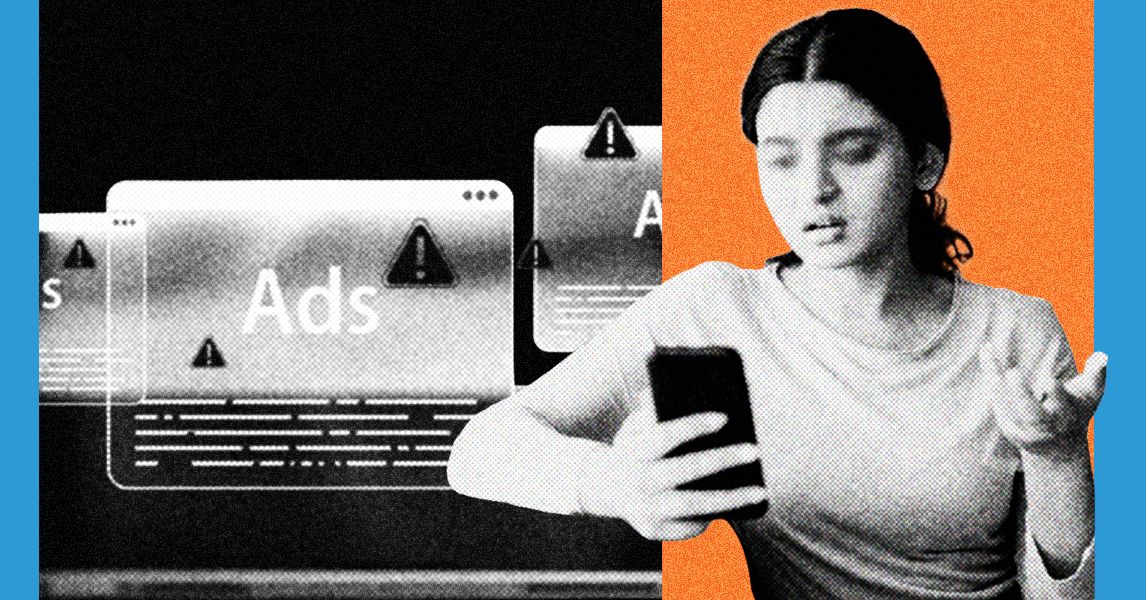

Something new just showed up under your ChatGPT answers, and it’s not a suggestion. ChatGPT ads rolled out to free users this year, and OpenAI now counts more than 100,000 advertisers buying space inside the world’s most popular chatbot.
If you pay for Plus, Pro, or any Business plan, breathe easy. OpenAI’s own help docs confirm paid plans see zero ads. Everyone else gets them, along with accounts that belong to users under 18, who are excluded by age checks and prediction models. That’s the deal OpenAI struck: your conversations stay free because advertisers are paying for them.
What ChatGPT ads look like
They’re not interstitials and they don’t interrupt your answer. Ads appear below the response, formatted as a small card with the advertiser’s name, logo, a headline, a short description, an image, and a link out. OpenAI’s official ads documentation spells out every element, which is unusual candor for an ad product this new.
The targeting is the interesting part. OpenAI’s system reads the context of your current conversation, so if you’ve spent ten minutes asking about hiking boots in the Rockies, the ad card is likely something outdoors-adjacent. Advertisers supply “context hints” describing the topics and conversations where they want to appear. When ads personalization is on, OpenAI can also weigh signals from your broader ChatGPT history.
There’s a real auction behind it, using a relevance-weighted second-price model. That’s advertising-speak for: the winner pays just above the second bidder’s price, but relevance decides who’s even allowed to win.
When ads showed up and where they’re going
OpenAI switched ads on in February 2026. Since then, per WIRED’s reporting, over 100,000 advertisers have signed on. Google answered last week by expanding ads inside AI Mode, its search chatbot, to ten more countries beyond the US, insisting users find them “highly relevant.”
The economics explain the rush. Generating every answer costs real money in compute, and free users don’t pay a cent. WIRED notes ads may be flat-out necessary for smaller chatbot platforms that can’t lean on venture cash or giant ad businesses. One startup building ads for AI experiences, Koah Labs, told WIRED that advertisers aren’t satisfied yet, but they expect the experience to improve fast.
Anthropic is the notable holdout. The company ran a Super Bowl commercial this year pledging to keep Claude ad-free, and its IPO filing doesn’t even mention advertising as a revenue possibility. Easier to take that high ground with roughly $112 billion in investor cash behind you.
What advertisers actually pay
This is where it gets practical if you sell anything online. OpenAI’s help center lists the numbers, and they’re more accessible than most people expect:
| Buying model | Cost basis | Recommended start | |—|—|—| | Clicks campaigns | CPC (per valid click) | $3-5 max bid per click | | Reach campaigns | CPM (per 1,000 impressions) | $60 default max bid |
Ads Manager Beta reports impressions, clicks, spend, CTR, average CPC, average CPM, and conversions, refreshing about every 15 minutes. You can bolt UTM parameters onto landing pages, so traffic from ChatGPT ads shows up properly in whatever analytics tool you already use.
For a small business, that CPC range is competitive territory. Google Ads clicks in many niches run $5 to $50. Paying $3-5 for a click from someone who just described their problem in detail, mid-conversation, is a genuinely different targeting mechanism. The intent signal is the conversation itself.
There are guardrails too. Ads skip sensitive contexts under OpenAI’s policies, and qualifying advertisers can add negative phrases to keep out of specific conversations entirely.
Rules advertisers keep bumping into
The docs also list what the auction won’t let you buy, and the list matters if you’re planning a campaign.
No ads to logged-in Plus, Pro, or Business subscribers, ever, which means your addressable audience is the free tier. No ads targeted at accounts OpenAI predicts belong to users under 18, based on both account age data and prediction models. Sensitive conversation contexts are off limits per the ads policies, and the negative phrase option is gated to qualifying advertisers rather than everyone.
Measurement has quirks too. Stats refresh roughly every 15 minutes, conversions need separate setup in Ads Manager Beta, and the $3-5 CPC guidance is a starting recommendation, not a floor. Plenty of niches will need bids well above that before delivery picks up. Set expectations accordingly, or the first week of data will read as failure when it’s really just underfunded.
WIRED’s reporting on chatbot ads adds the industry context: advertisers aren’t satisfied with early results anywhere yet, across every platform, and they expect that to improve as the ad-tech layer matures.
How to see fewer ads (or none)
Three moves, depending on your patience level.
First, the nuclear option: subscribe. Plus, Pro, and Business plans are ad-free per OpenAI’s documentation, and that’s currently the only guaranteed way to remove them.
Second, check your personalization settings. Ad personalization can be turned off, which limits ads to conversation-context matching instead of your broader history. You’ll still see ads, but they’re scoped tighter.
Third, use it for things ads don’t touch. OpenAI’s safeguards block ads in sensitive contexts, and coding, math, and document work rarely attract a matching ad card. The more your chats drift into shopping-adjacent territory, the more ads you’ll meet. Your account itself is becoming a wider login, by the way: sign in with ChatGPT partner apps now extends your plan across the web.
What this means if you run a business
Two plays here, and the window on both is early.
Play one: test ChatGPT ads directly. The floor is low, the reporting exists, and 100,000 advertisers isn’t saturation for a platform with this many users. If your product solves a problem people literally describe to a chatbot, context hints let you camp outside that exact moment.
Play two: prepare for AI search traffic that arrives pre-monetized. As Google pushes ads into AI Mode across more countries, the free-traffic math for content sites keeps shifting. We broke down when AI search beats Google and when it doesn’t, and the practical answer hasn’t changed: diversify or get squeezed.
One more thing worth your time: OpenAI has been pruning old entry points, including retiring the ChatGPT Classic app in January. If your workflows still route through legacy clients, those are consolidating fast.
The bottom line
ChatGPT ads are no longer an experiment. They’re a funded, auction-priced channel with official docs, and they’re expanding to free users across every market OpenAI serves. Paid plans stay clean, advertisers get a novel intent signal, and Claude’s ad-free promise is the counter-position to watch.
If you sell something, a $3-5 test budget answers more than any guesswork will.
Takeaway: Free users will keep seeing ad cards under answers, so either budget for Plus or tune your personalization settings this week. If you market a product, set a small CPC campaign in Ads Manager Beta and let conversation context prove or kill the channel for you. The ads aren’t going away, so decide how you respond to them on purpose.