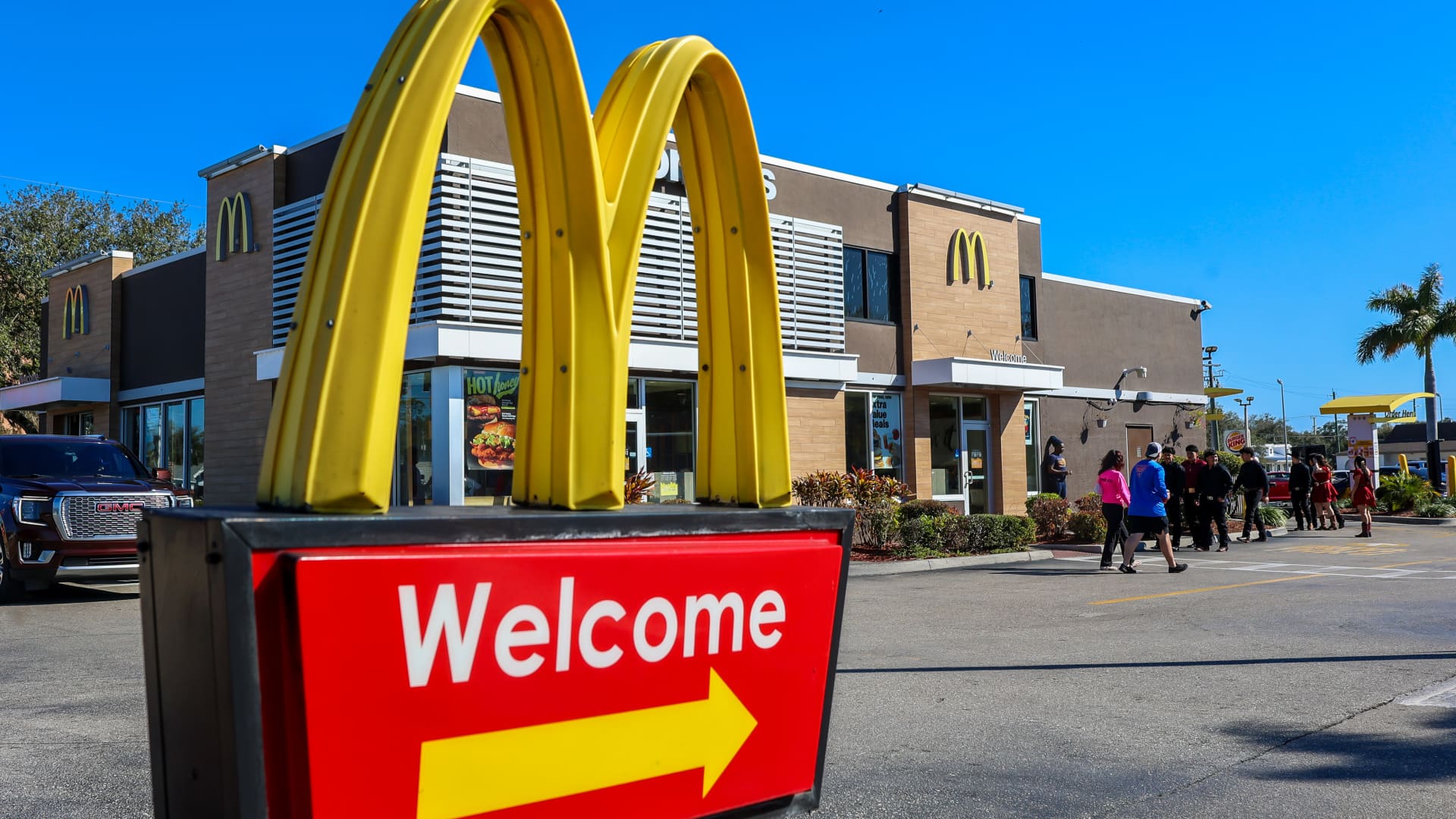

A Big Mac costs $5.69 at one McDonald’s in Fresno. Two miles away, the exact same sandwich runs $6.89. That 21% gap isn’t a typo, an accident, or a franchisee with a grudge. It’s what happens when AI pricing gets hold of your lunch order.
A Reuters investigation published this week pulled back the curtain on how McDonald’s sets menu prices across its nearly 14,000 US restaurants. The short version: an algorithm decides, street by street, what you’ll pay. And there’s a lesson in here for anyone who runs a business, no matter the size.
How McDonald’s AI pricing actually works
The company runs a machine-learning engine that chews through millions of daily transactions. For every menu item, at every location, it generates what McDonald’s calls “the optimal price.” The system is operated by Tiger Analytics, an analytics firm that works closely with corporate on the rules.
What goes into that calculation? More than you’d expect:
- Willingness to pay. The engine estimates how much each neighborhood’s customers will tolerate before they drive somewhere else.
- Competitor menus. It scrapes online prices from nearby Wendy’s and Burger King locations and factors them in.
- Corporate guardrails. Executives set targets like “don’t raise ice cream or drink prices during summer” and “focus increases on items that haven’t moved in two years.”
- Franchisee behavior. The system records when store owners deviate from its recommendations. In detail.
Franchisees using the portal see messages like “your restaurant is showing medium sensitivity to price.” Which is corporate speak for: your customers are being measured.
Why prices differ between two stores two miles apart
Costs vary between locations, sure. Rent differs, labor differs. But the Reuters reporting found the engine has widened price gaps between neighborhoods within the same area, and the Fresno check showed a company-run store charging a 21% premium over another company-run store nearby. When the same corporation owns both stores, “local costs” gets a lot less convincing as an explanation.
McDonald’s position is that the portal is “a tool, not a mandate,” and that prices reflect distinct local markets. Five franchisees told Reuters they felt pressure to use the AI tools anyway. Since January, franchisee agreements have required “constructively engaging” with the company’s approved pricing consultants. About a third of owners ignored the under-$3 menu guidance, and the CEO publicly called out their “softer” business results on the earnings call.
You don’t need a spreadsheet to read between those lines.
What this means for your wallet
Two practical takeaways if you’re the one buying the burgers.
First, the app is where price differences live. Reuters confirmed the gaps show up in McDonald’s mobile ordering. Same meal, different price, depending on which store you select. If you order from a couple of nearby locations, checking both prices takes ten seconds and occasionally saves you a buck or two.
Second, assume every big chain is watching. Yum Brands, the company behind KFC and Taco Bell, also uses AI in operations and didn’t dispute the reporting. The era of “menu price is the menu price” is quietly ending across fast food.
There’s a history here worth knowing. Wendy’s got roasted in 2024 when its CEO floated “dynamic pricing” tests, and insisted later the comments were misconstrued. Instacart quietly killed a trial that showed different grocery prices to different shoppers after a study exposed it. Customers revolted both times. McDonald’s is pushing forward anyway, which tells you how much the math must be favoring it.
The small-business angle nobody’s talking about
Now flip the script. This same class of technology, once reserved for companies with 14,000 stores, is sitting within reach of a business with 14 tables or a single Shopify store. And that’s the part worth your attention if you sell anything online.
Consider what modern AI pricing tools can actually do for a small operator:
- Adjust prices based on demand patterns across the week, not just flat happy-hour discounts
- Test price points on a subset of visitors and measure conversion before committing
- Watch competitor prices automatically instead of checking manually every morning
- Flag items priced too low relative to what customers already pay happily
E-commerce platforms are the easiest entry point. Our guide to Shopify AI search covers how AI lifts sales on the storefront side, and pairing that with smarter pricing is a one-two punch. Restaurants, freelancers, and product sellers can borrow the McDonald’s playbook at their own scale: collect transaction data, test changes, let evidence set the number instead of gut feel.
Want a cautionary tale before you get excited? AI agents ran real businesses and earned exactly $0 in a widely covered experiment. Automation amplifies strategy; it doesn’t replace one. Price testing with guardrails, like McDonald’s summer ice-cream rule, beats “algorithm knows best.”
There’s also a data foundation question. Pricing intelligence is only as good as the data feeding it, which is why the company brain approach matters: get your sales and customer data organized first, then let AI make recommendations on top of it.
The regulatory storm brewing over algorithmic pricing
Here’s a wrinkle that could reshape all of this: antitrust lawyers are circling. US courts are actively scrutinizing whether algorithmic pricing tools can facilitate illegal coordination between competitors. Franchisees occupy murky legal territory, sometimes treated as competitors of the brand itself, which is exactly why McDonald’s terms of service apparently include antitrust guidance.
Other experts argue the legal risk is low because courts have historically given brands wide latitude over franchisee pricing. Both things can be true: the risk today is low, and the precedent this sets is enormous.
If regulators eventually restrict “willingness to pay” modeling, the small-business tools built on the same logic will inherit those rules. Watch this space. Honestly, the McDonald’s story is less about burgers and more about the first big test case for consumer-facing AI pricing.
What to do with all this
If you’re a customer, compare app prices before you order, and expect algorithmic pricing to spread to more of the things you buy. If you run a business, start small: pick five products, review their prices against demand data this month, and test one change. The tools are getting cheaper every quarter, and the companies moving first are quietly widening margins while competitors guess.
The full Reuters investigation is worth your time; CNBC’s report on McDonald’s AI pricing push has the details McDonald’s would rather you skip.