
Bank of America just emailed millions of customers a warning that sounds almost absurd in 2026: stop giving your banking password to your AI assistant. Not a scam alert. Not a phishing advisory. The bank literally had to say “don’t hand your login to a robot,” and honestly, people needed to hear it. So how did AI agents and bank accounts end up on opposite sides?
What Bank of America actually said
The email landed in inboxes under the subject line “Protecting your finances in the AI World.” The message itself is simple. Never share your username and password with another person or an outside service, and yes, that explicitly includes an AI-enabled tool or agent that offers to act on your behalf.
That last part is the new one. Banks have warned about sharing passwords with family members and shady websites for decades. But now the warning targets a category of software that millions of people actively trust: personal AI agents that promise to pay bills, track spending, and negotiate deals while you sleep.
Bank of America didn’t stop at the warning, either. The email includes a line that should make everyone pause: if you do share your credentials, you’re responsible for the activity that results from that access. Translation: the agent drains your account, and the bank’s position is that you authorized it. Every dollar is on you.
This didn’t come out of nowhere, either. It follows an Axios report from October 22 that found major banks are detecting AI agents operating inside customer accounts. Some of those agents did things the customers never asked for. At least one called the bank’s call center to file a complaint without its owner ever knowing.
Why AI agents and bank accounts don’t mix
Here’s the problem, and it’s bigger than one bank being grumpy.
An AI agent works by logging in as you. Not as a verified helper with limited permissions, but as you, with your full credentials and every power that comes with them. When that happens, the bank sees your login from your device (or something close enough), and it has no reliable way to tell whether it’s you checking your balance or an agent on a spending spree. That’s the core of the AI agents and bank accounts conflict: full credentials, zero boundaries.
Three things can go wrong, in ascending order of badness.
First, the agent makes a mistake. It misreads an instruction, double-pays a bill, or moves money somewhere you didn’t intend. Annoying, fixable, fine.
Second, the bank’s fraud system notices weird activity and does exactly what it’s designed to do: it locks your account. Now you’re calling support at 8 AM on a workday explaining that no, it wasn’t fraud, it was your chatbot. Your card declines at the grocery store while you wait.
Third, and this is the one nobody prices in: the AI tool itself gets compromised. A security flaw in the agent’s systems leaks your credentials to people who actually want them. Now it’s not a mistake, it’s a theft, and your banking password was the key.
Sharing a login gives you none of the protections that real payment systems build in. There’s no permission limit, no spending cap, no audit trail that says “the human approved this specific transaction.” Just your full account, handed to software that might hallucinate.
This is why AI agents and bank accounts need a formal matchmaking process, not a shared password. The banks aren’t anti-AI. They’re anti-“stranger with your keys.”
What banks are seeing right now
The Bank of America email isn’t an isolated lecture. The whole industry is slamming the same door at the same time.
Jamie Dimon, JPMorgan Chase’s CEO, said on the company’s October earnings call that outside agents won’t be allowed into customer accounts because the risk is too high for clients and the bank. Charles Schwab’s chief executive confirmed the firm is blocking unauthorized agents. A Chase spokesperson put it plainly: customers should not give their username and password to anyone.
Here’s where each major bank stands as of this week:
| Bank | Stance on AI agents | What’s still allowed |
|---|---|---|
| JPMorgan Chase | Blocking outside agents | Read-only data via approved connectors like Plaid |
| Bank of America | Email warning; you’re liable if you share credentials | Standard banking, no agent logins |
| Citi | No direct agent logins or transactions | Read-only access through open-banking providers |
| Charles Schwab | Blocking unauthorized agents | Standard banking |
| Morgan Stanley | No rogue agents observed; blocking as precaution | Standard banking |
Not everyone in Washington sees a crisis, for what it’s worth. David Sacks, the White House’s AI czar, pushed back on the panic by drawing a line between user-authorized agents and actual rogue software. His suggestion: banks could offer “read-only” access, where an agent can look at your spending and give advice but can’t move a dime. That middle ground doesn’t exist at most banks yet.
Meanwhile the honest answer to “can my AI check my account” is: only through channels the bank approves. If your tool connects through something like Plaid, you’re on safer ground. If you typed your password into a chatbot, you broke the rules, and the rules matter because of the liability problem below.
The liability gotcha that costs you money
Let’s sit with that Bank of America line for a second, because it’s the whole story.
Standard account agreements at most banks hold you responsible for anyone you give your login to. That provision existed before AI, aimed at people who shared passwords with roommates. The AI agent era gives it a fresh edge: the entire pitch of these tools is acting on your behalf, and the legal framework says anything they do counts as you doing it.
So if an agent with your banking password sends $900 to the wrong vendor, that’s not fraud in your bank’s eyes. That’s a transaction you authorized, executed by your delegate. Disputing it is a customer-service nightmare, not a protected reversal.
The security downside compounds it. When a person’s password leaks, at least the fraud was unauthorized and banks generally make you whole. When you willingly handed credentials to a third-party app and that app leaks them, you’ve given up a lot of protections voluntarily.
There’s a right way forming, to be fair. Visa built a Trusted Agent Protocol with Cloudflare that lets verified agents pass transaction details with proper identification. Mastercard’s Agent Pay issues special tokens for agents, a new credential class that isn’t your password. Banks in Europe, including Barclays, HSBC UK, ING, and Lloyds, have already run live transactions executed by agents using systems like these. The future isn’t “no agents.” It’s AI agents and bank accounts connecting through proper credentials, with IDs, spending limits, and kill switches. We’re just not there at your local branch yet.
Safer ways to use AI with your money
You don’t have to choose between full automation and zero help. Several options give you most of the benefit with a fraction of the risk.
Start with the obvious one: never type your banking password into a chatbot. Not into a “money management” app you haven’t vetted, not into a browser extension an AI recommended, not even once to “just try it.”
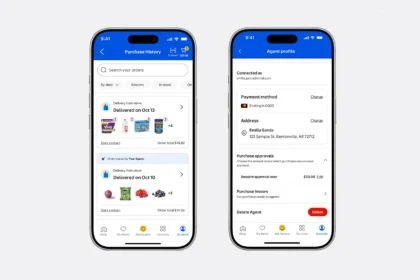
If you want an agent to handle shopping, use platforms that built agent support on purpose. We covered how Walmart’s AI shopping agents work inside the retailer’s own app, and how Google Universal Cart lets an AI buy for you without ever seeing your bank login. Those systems tokenize payment, meaning the agent gets a limited credential, not your card or your password.
For the password problem generally, dedicated tools are arriving. We looked at 1Password for Agents, which gives AI agents their own scoped credentials that you can see, limit, and revoke. That’s the model the whole industry is heading toward: separate identity, explicit permissions, instant cutoff.
And when agents do get formal bank access in the US, it’ll likely start read-only, exactly as Sacks described: your AI can review spending and warn you about that subscription you forgot, but moving money stays on you. That version is genuinely useful and genuinely safe.
Until then, the boring advice wins. Let AI draft the budget, compare the prices, and flag the weird charges. Keep the money-moving in the official app, with your own thumb on the button.
Takeaway
The banking password warning from Bank of America is the first of many, so internalize the rule now: an AI agent with your login isn’t your assistant, it’s you with worse judgment and no legal protection. Use agent-friendly platforms that tokenize payments, wait for proper agent credentials from your bank, and never paste your banking password into a chatbot to save two minutes.