
Google just said the quiet part out loud. AI Mode queries are exploding, but AI Mode traffic back to your website earns less money, and Google’s own executives admitted it on the earnings call. Reddit went further and says it lost more than a million Google referrals a week because of this shift.
The numbers Google just confirmed
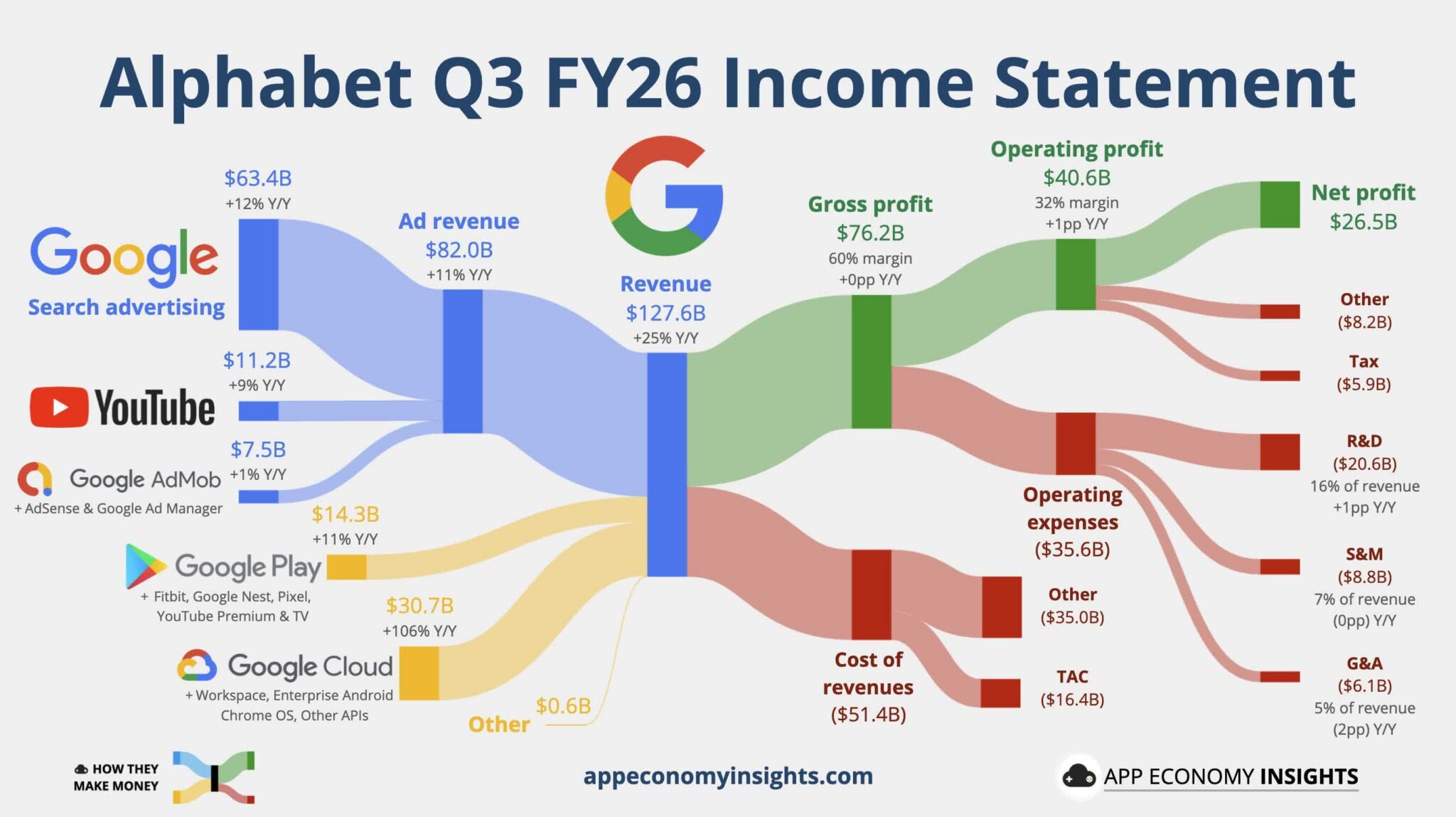
Alphabet reported Q3 results this week, and the market reaction tells the story faster than any press release. Search revenue grew 12% year over year, down from 17% the quarter before, and analysts expected 15%. The stock dropped as much as 10% on the news. For a company this size, that is one of the worst trading days since the 2004 IPO.
Then came the part that matters to anyone with a website. Philipp Schindler, Alphabet’s chief business officer, told investors that strong growth in AI Mode queries had an impact “because of the lower monetization.” Each AI Mode query brings in less ad money than a classic search, and Google admitted the gap out loud. In plain English, AI Mode traffic is growing while the money behind it isn’t.
Why does an AI answer earn less? Classic search shows a shelf of ads beside ten blue links, so every click gets multiple chances to monetize. AI Mode collapses that whole page into one conversational answer with fewer ad slots, and Google is still experimenting with formats. Until that math changes, every query that moves to AI Mode is worth less, even when the query count looks great on a slide.
Meanwhile the spending says this transition is unstoppable. Capital expenditures hit $51.4 billion in a single quarter, and free cash flow landed at negative $9.1 billion. Google Cloud did double to $30.7 billion, so the business isn’t dying. But the product that actually sends you visitors just admitted it has a revenue problem.
Sundar Pichai also described where search is going: one blended experience across AI Overviews, AI Mode, and classic results. Queries there run about three times longer than old-school searches, and one in five now includes voice, images, or documents. Ad testing in AI Mode is expanding from the US into more countries too.
| Classic Google Search | Google AI Mode | |
|---|---|---|
| Money per query | Mature, proven ad system | Lower, by Google’s own admission |
| How people ask | Short keyword strings | Questions about 3x longer |
| Clicks out to sites | Ten blue links, obvious exits | Answer first, fewer reasons to leave |
| Ad rollout | Mature and worldwide | Starting from the US, expanding |
| Traffic reporting | Clear referrals in analytics | Blended, hard to isolate |
Reddit is the proof, not the exception
Here’s the data point that should sting. Reddit CEO Steve Huffman told investors his site lost more than 1 million Google search referrals per week in October. The stock still fell over 25% after otherwise solid earnings, because investors understood what that number means.
His exact words: “AI Mode does not drive traffic. Not for us, and not to anybody as far as I know. That’s just a fundamental shift in how Google works.”
Not to anybody. Sit with that for a second. This isn’t one publisher whining about an algorithm tweak. It’s a platform with billions of monthly visits saying the referral faucet is closing, then acting on it. Reddit is now testing login walls outside the US to cut its dependence on Google. Companies don’t build walls against traffic they expect to keep.
Google’s version of the story
To be fair, Google published its own counter-narrative right before the earnings drop. The company claims total organic click volume from Search is “relatively stable” year over year, and that the clicks it does send are higher quality, meaning people stick around instead of bouncing straight back.
Both things can be true at once. Total clicks can hold steady while the distribution flips completely. Google’s own blog admits traffic is shifting toward forums, videos, podcasts, and sites with authentic first-hand voices. Notice that stable is a statistic about everyone, not a promise to you.
If you run display ads, this hits twice. Fewer sessions mean fewer impressions, and an AI citation doesn’t pay any bills. Some sites will win the new distribution game, but hope is not a revenue plan.
That’s also why AI Mode traffic deserves its own math. Pichai called these “upper funnel” queries with high commercial intent, and maybe that pays off at scale someday. For a small site today, the arithmetic is simpler. When an AI answer satisfies the question right on the results page, the visit you used to get never happens. Fewer visits, murkier attribution, and no clear date when the balance flips back.
So chasing AI Mode traffic alone is a losing game right now. The smarter play is to keep Google happy while building routes to your site that no single gatekeeper can switch off.
What to do this week
Pick one of these. Ship it before the next Google update makes the decision for you.
1. Write for the answer, not just the link
If AI engines summarize your topic, become the source they summarize. This discipline has a name now, generative engine optimization, and our GEO beginner guide breaks down the full method. The core move is structure: real questions as headings, direct answers up top, and facts an AI can quote cleanly. We also published a shorter walkthrough on getting found in AI search if you want the quick version.
2. Build one channel Google can’t switch off
Email is boring, and that’s exactly why it works. A weekly newsletter to 500 subscribers beats 5,000 fleeting search visits, because nobody can reroute your list through an AI answer. Offer something genuinely useful (a template, a checklist, a cheat sheet) and put the signup inside your best-performing articles. Pick a reputable email tool, start on the free tier, and connect it to your three most-visited posts. That’s an afternoon of work that compounds for years.
3. Follow the clicks that still exist
Google’s own data says engagement is moving to forums, video, and communities. Go be useful where the people already are. Pick two communities where you already lurk, then answer three questions a week with real specifics and no drive-by link drops. One honest, detailed thread can outperform a month of SEO guesswork, and it ages well, because those threads keep getting quoted by AI engines.
4. Measure what matters now
Stop judging your site by total sessions alone. Check Search Console to see how much of your search presence includes AI features, since Google now reports AI Mode traffic inside Search Console, and track whether referrals from AI engines are growing at all. Our AI referral traffic benchmark gives you a real baseline to compare against instead of vibes. Review it monthly. Trends matter more here than single-day numbers.
5. Decide who gets automated access
AI agents are starting to browse the web on behalf of actual users, and you’ll choose what they can touch. Some sites welcome that traffic, while others block AI agents entirely to protect content and server load. There’s no universal right answer, but there is a right answer for your business, and setting it takes about ten minutes.
The bottom line
Google admitted AI Mode traffic monetizes worse, Reddit quantified the loss at a million visits a week, and neither company expects the trend to reverse. Don’t panic, but don’t wait either. Pick one move from the list above, ship it this week, and start building an audience that shows up even when the algorithm changes its mind.