


If you’ve ever posted a character design online, licensed your work to a platform, or used AI to speed up your creative process, you need to pay attention to what just happened with Amazon. The company just greenlit three AI-animated TV shows for Prime Video — and one of them was made without the original creator’s permission. Meanwhile, another named creator already walked away from the project in protest. This isn’t just entertainment news. It’s a warning sign for anyone making a living with AI tools.
What happened: Amazon’s new AI-animated shows on Prime Video
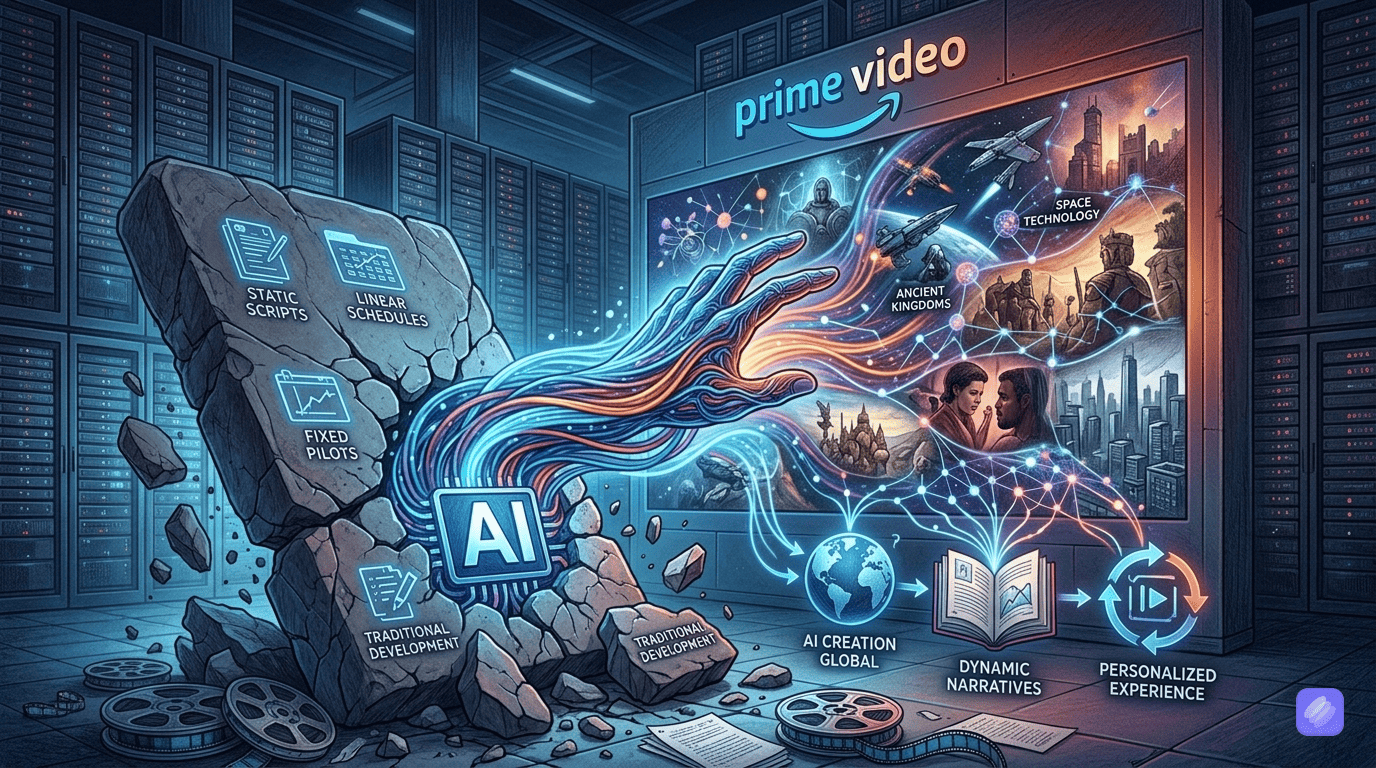
On May 28, 2026, Amazon MGM Studios and AWS announced the GenAI Creators’ Fund at the “AI on the Lot” conference in Los Angeles. The fund backed three AI-animated children’s shows for Prime Video, all produced using Amazon’s internal AI platform called Project Nara.
For Amazon, this was a bet on a future where small teams can produce animated content at a fraction of traditional costs. For creators, however, it instantly raised uncomfortable questions about who owns what — and who gets left out.
Cupcake & friends — the controversy that started it all
The biggest lightning rod is “Cupcake & Friends,” a show based on the “Good Advice Cupcake” character created by Loryn Brantz for BuzzFeed back in 2017. The character built a following of over 2 million on Instagram under Brantz’s creative direction.
Here’s where things went wrong: BuzzFeed licensed the character to Amazon for AI-animation without Brantz’s knowledge or involvement. In other words, someone else decided her creation was fair game for AI recreation, and she found out along with everyone else.
Brantz called it an “assault on artists everywhere” and publicly called for a boycott. Furthermore, she’s now exploring legal options. For context, BuzzFeed told her back in 2023 that they wouldn’t continue the character without her — making the about-face especially stinging.
Love, Diana music hunters and punky duck
The other two shows include “Love, Diana Music Hunters,” led by former Nickelodeon executive Albie Hecht, and “Punky Duck,” originally created by animator Jorge R. Gutierrez (Maya and the Three, The Book of Life).
However, Gutierrez dropped out of the project on May 29 — just one day after the announcement. He initially joined because he wanted to “showcase artists” working with the new technology. Afterward, overwhelming backlash from the animation community pushed him to leave.
Consequently, one of three announced shows now has no named creator attached to it, and Amazon hasn’t clarified whether Punky Duck will move forward at all.
The GenAI creators’ fund and Project Nara
Amazon’s GenAI Creators’ Fund represents a partnership between Amazon MGM Studios and AWS. The idea is to use AI to “democratize” animation production through Project Nara, Amazon’s proprietary AI production platform.
On the surface, this sounds empowering. In practice, it means fewer human animators are needed, and the question of creative ownership becomes much murkier. If a machine can recreate your artistic style or your characters, what stops someone with deeper pockets from doing it without you?
Why this matters for every creator using AI
You might be thinking, “I’m not an animator, and I don’t work for BuzzFeed — why should I care?” Here’s the truth: the Cupcake situation isn’t an isolated case. It’s a preview of a much larger conflict that will affect freelancers, YouTubers, designers, writers, and anyone who creates digital content.
The copyright question nobody wants to answer
Current US copyright law works in favor of the entity that owns or commissions the work. If you create something as an employee or under a work-for-hire agreement, your employer typically owns the IP. That’s the position BuzzFeed is taking with Brantz’s character.
On the other hand, creators increasingly expect that their creative identity and artistic contribution should count for something — especially when their work gets AI-recreated without their input. The legal system, however, hasn’t caught up with this reality yet.
For everyday creators, this gap is dangerous. For example, if you designed a character, built a brand around it, and then a platform or publisher you once worked with decides to hand it to an AI pipeline, you might have very little recourse.
When big platforms use your AI work without you
This isn’t purely theoretical. Brantz created Cupcake while employed by BuzzFeed. Therefore, BuzzFeed argues they own the character outright. But Brantz was the creative force behind it — she drew it, gave it personality, and built its audience.
Similarly, imagine you create a popular design for a client, and years later that client decides to have AI regenerate variations of your work to sell or license further. You signed away the IP in your contract, so technically they can. The question isn’t whether it’s legal. The question is whether it’s fair — and whether you even realized what you were signing.
The licensing trap: What BuzzFeed did to Cupcake’s creator
The most important takeaway from the Brantz story is this: when you create something under someone else’s umbrella, you might not own it — even if the audience associates it entirely with you.
BuzzFeed licensed Cupcake to Amazon. Brantz didn’t know about it until the announcement. This is the kind of scenario that should make every freelancer, contractor, and platform creator review their agreements.
What Amazon AI TV shows mean for your own AI content
So, how does this affect you right now? Whether you use ChatGPT for writing, Midjourney for images, Runway for video, or any other AI tool, the Amazon situation highlights three real risks you should take seriously.
3 things every creator should do right now
1. Read your contracts — especially the AI clauses. Many platforms and publishers have updated their terms of service to include AI usage rights. These clauses often allow the company to use, modify, or reproduce your content with AI tools. You need to understand exactly what you’re agreeing to before you post or submit.
2. Keep records of your creative process. If you ever need to prove human authorship — for copyright protection or disputes — having documentation of your sketches, drafts, notes, and iterations matters. Save versions. Timestamp your work. Treat your creative process like a paper trail.
3. Avoid creating flagship work under someone else’s IP umbrella. If a character, brand, or design is important to your long-term career, think carefully about creating it as a work-for-hire or under a platform’s terms. Your best work should live where you control it.
How to protect your work when using AI tools
Using AI as part of your creative workflow doesn’t mean you lose all rights. In fact, the US Copyright Office has clarified that works containing AI-generated material can still be copyrighted if a human made sufficient creative choices — selecting, arranging, editing, and directing the AI output.
In practice, this means:
- Don’t just generate and post. Actively edit, curate, and reshape AI output. The more human creative decisions you make, the stronger your copyright claim.
- Document your AI usage. Keep records of which tools you used, what prompts you started with, and how you modified the results. Transparency builds credibility.
- Layer your own creativity on top. The strongest legal protection comes from using AI as one tool in a larger, human-driven creative process.
The legal landscape: Where things stand in 2026
The law is moving slowly. The US Copyright Office has been issuing guidance on AI-generated works since 2023, but Congress hasn’t passed any major legislation addressing AI and creator rights. Meanwhile, cases like the Brantz situation are testing the boundaries in real time.
Until clearer laws emerge, the most practical advice is this: don’t assume your contracts protect you, don’t assume platforms will act in your interest, and don’t assume AI-generated versions of your work are harmless.
The bigger picture: AI, creators, and who really owns what
The Amazon situation isn’t just about one character or one platform. It’s about the power dynamics between creators and the companies that distribute, host, or publish their work.
Jorge Gutierrez walked away — and what that tells us
When a respected animator like Jorge Gutierrez joins an AI initiative and then leaves 24 hours later, it sends a clear signal. Even creators who are open to AI as a tool are uncomfortable with how companies are applying it — especially when human artists get sidelined.
Gutierrez wanted to demonstrate that artists could drive the technology. Instead, he discovered that the industry’s current approach to AI animation marginalizes the very people it claims to empower.
What studios are betting on (and what they’re risking)
Studios like Amazon are betting that audiences won’t care whether content is AI-animated as long as it’s entertaining. However, they’re also risking massive reputational damage — as the Brantz and Gutierrez situations demonstrate.
Moreover, when the creators associated with a project publicly reject it, audiences notice. The animation community is organized, vocal, and deeply skeptical of AI replacing human labor. Studios that ignore this backlash do so at their own peril.
For everyday creators, the lesson is straightforward: the industry is watching how these situations play out, and the precedents being set right now will shape creator rights for years to come.
FAQ: Amazon AI TV shows and creator rights
Can Amazon use AI to make shows without the original creator?
Yes, if the IP owner (in this case, BuzzFeed) licenses the rights. BuzzFeed owns the Cupcake character under work-for-hire terms, which means they can legally license it to Amazon for AI recreation. The controversy isn’t about legality — it’s about fairness and whether creators should have a say when their work gets AI-reproduced.
What does this mean if I use AI for my own content?
Using AI tools in your creative process doesn’t automatically strip you of copyright. The US Copyright Office has stated that human creative choices — like editing, curating, and directing AI output — are protectable. However, purely AI-generated content without meaningful human input may not qualify for copyright protection. Document your process to strengthen your position.
Are AI-generated TV shows legal?
Currently, yes. There’s no law preventing studios from using AI to produce TV shows. The legal questions center on copyright ownership of AI-generated content, training data rights, and whether AI output infringes on existing works. These issues are being fought in courts and policy discussions right now.
How can I protect my creative work from AI misuse?
Three practical steps: read contracts carefully (especially AI clauses), keep detailed records of your creative process, and maintain ownership of your most important work whenever possible. Don’t create flagship IP under someone else’s terms if you can avoid it. When using AI tools, actively edit and reshape the output — passive generation offers weaker legal protection than human-directed AI-assisted work.
Last updated: May 30, 2026 — Jorge Gutierrez dropped out of Punky Duck on May 29, and the story continues to develop.