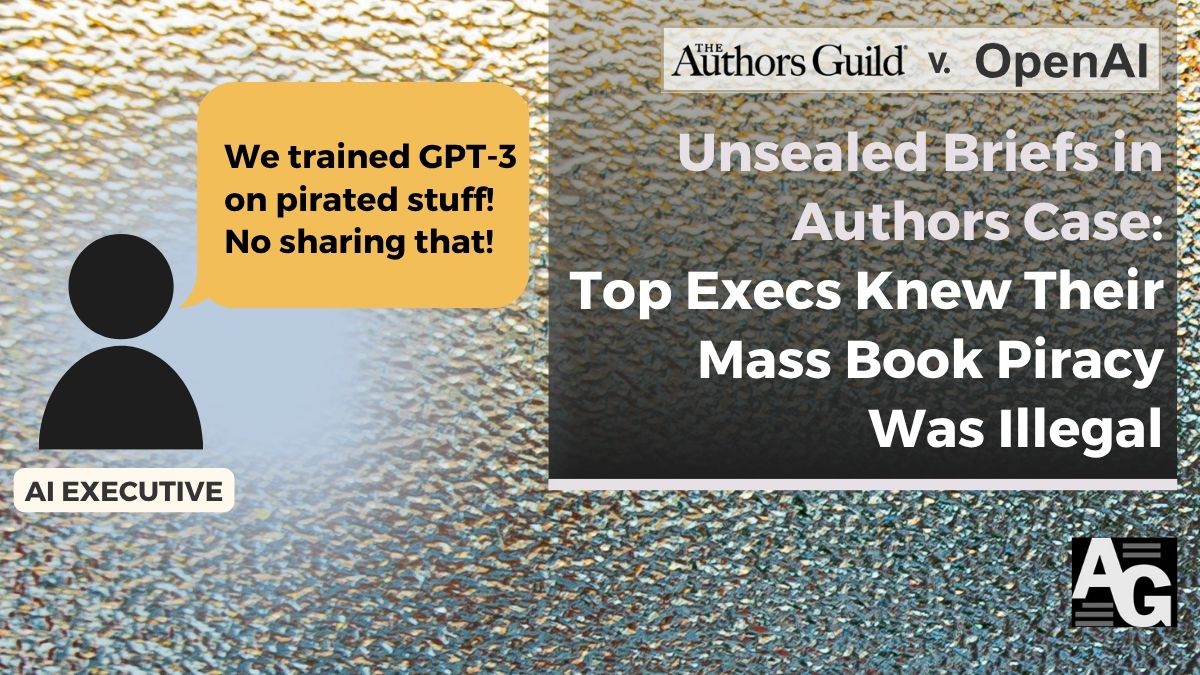

Court filings unsealed this month read like a confession. OpenAI executives knew their models were trained on pirated books, and they knew it years ago, according to the Authors Guild. If you self-publish, that news lands right on your desk. It changes how you should publish AI books, and not in the way you might expect.
What the court filings actually say
The Authors Guild sued OpenAI and Microsoft on behalf of a long list of working writers. We’re talking John Grisham, George R.R. Martin, Jodi Picoult, Michael Connelly, Jonathan Franzen, and thousands of class members behind them.
The new briefs, filed on September 17 and highlighted by the Guild on September 21, put internal messages front and center. Microsoft reportedly knew about OpenAI’s use of LibGen, a pirate library of books, as early as April 2019. Sam Altman and Dario Amodei presented early GPT-3 work to Bill Gates and disclosed the LibGen dataset at that meeting.
One OpenAI researcher worried about “optics” if headlines showed the company “uses copyrighted data from sketchy russian website.” In the summer of 2022, the company allegedly ran Project Clear, an effort to delete LibGen traces from its systems and storage.
Here’s the quote that should stop every working writer cold: the plaintiffs’ brief argues that “OpenAI’s GPT models pose an existential threat to those who write and publish books.” An OpenAI policy director predicted back in 2020 that the company’s systems would substitute for authors on Amazon, and that the company would likely ignore artists’ concerns and release anyway. A hearing is expected in early 2027.
None of this is settled law yet. But the direction is clear, and it tells you exactly where the industry is heading.
The copyright rule that decides everything
While the lawsuit plays out, one government rule already applies to you today. The U.S. Copyright Office holds that copyright protects only material that’s the product of human creativity. Passages a model generated on its own get no protection. Your selection, arrangement, and substantial editing do get protection.
That matters more than most beginners realize. If nobody can own the AI-generated portions of your book, nobody can stop a copycat from reusing them. Your exclusive rights only cover the parts you actually authored.
The Office also requires you to disclose AI-generated material when you register a copyright, and to disclaim it. Hide it, and you risk having the registration canceled, which is a disaster if you ever need to sue an infringer. Knowingly false statements in a registration application can even bring fines up to $2,500.
So if you want to publish AI books with real protection behind them, the math is simple: the more genuine human authorship in the manuscript, the more of the book you actually own.
Amazon already draws the line
Amazon doesn’t wait for courts. Its Kindle Direct Publishing guidelines require you to inform Amazon of AI-generated content, including text, images, cover art, and translations, whenever you publish or republish a book through KDP.
The definition is stricter than people assume. AI-generated means an AI tool created the actual content, and it stays AI-generated “even if you applied substantial edits afterwards.” AI-assisted means you wrote it yourself and used AI to refine, error-check, or brainstorm. That category needs no disclosure at all.
Read that twice, because it’s the whole game. An AI-written draft with human polish still counts as AI-generated at Amazon. A human-written draft with AI feedback counts as AI-assisted. Same tools, opposite disclosure duties.
Amazon doesn’t label these books publicly or ban them outright. But you’re responsible for the accuracy of what you declare, and misrepresentation risks your account. If you plan to publish AI books for years, treat that accountability as the new normal rather than a hurdle. The Authors Guild case shows where the pressure is heading: toward platforms demanding accountability for machine-made content.
A workflow that keeps you safe
Here’s the process I’d use to publish AI books in this environment, step by step.
- Write the first draft yourself. Ugly is fine. Your voice, your structure, your arguments on the page.
- Use AI as an editor, not a ghostwriter. Ask for feedback on clarity, catch logical gaps, check grammar. You stay the author of every sentence.
- Keep receipts. Save your drafts, outlines, and notes. If your authorship is ever questioned, that history is your evidence.
- Register the copyright honestly. Disclose any AI-generated elements, disclaim them, and claim the human-authored portions.
- Answer Amazon’s question truthfully. If a cover image or a passage was AI-generated, check the box. The disclosure costs you nothing; a removed book costs you everything.
Notice what this workflow does. It keeps you on the “AI-assisted” side of Amazon’s line, keeps your copyright claim strong, and keeps you far away from the behavior now being litigated. The people in trouble in that courtroom trained on stolen libraries. You just want to write faster.
Why the slop flood is your opportunity
Here’s the part nobody says out loud. The lawsuit confirms what readers already suspect: a wave of machine-generated books is hitting stores, and much of it is bad. “Machines creating slop for more machines” is now literally quoted in a federal filing.
That flood raises the value of everything it isn’t. Readers can smell a hollow book in the Look Inside preview. Reviews punish it. Amazon’s quality guidelines already allow removal of content that disappoints customers.
Writers who use AI the disciplined way, human-first with machine assistance, get the speed benefits without the smell. And the authors bringing this lawsuit aren’t anti-technology holdouts; they’re defending the market position that quality earns. That’s a position you can share. The contrast between your careful book and the slop next to it is marketing you don’t have to pay for. We’ve covered this dynamic before when Amazon tightened rules for AI-created TV content, and the pattern repeats: platforms reward verified human work as the flood rises.
If you doubt the stakes for creative careers, look at what happened when companies started cutting entry-level roles as AI absorbed the work. Then read our earlier piece on what it costs you when AI writes everything for you. The pattern is the same at every scale.
Takeaway
The lawsuit is a warning about shortcuts, not a ban on tools. Write it yourself, let AI assist rather than author, disclose what requires disclosure, and you can publish AI books that keep their copyright, their listing, and their reputation. Open your manuscript folder tonight and start your draft before the market fills with everyone who didn’t.
Sources: Authors Guild, U.S. Copyright Office AI guidance, Amazon KDP content guidelines